

Acquiring customers is crucial for any business’s success. Effective strategies can make a big difference.
Customer acquisition strategies are essential in today’s competitive market. They help businesses attract new customers and grow their audience. Whether you’re a small startup or an established company, understanding these strategies can lead to sustainable growth. In this blog post, we’ll explore various methods to gain new customers, ensuring your business thrives.
From digital marketing to offline tactics, we’ll cover techniques that suit different industries and budgets. By the end of this post, you’ll have a clear idea of how to implement these strategies effectively. Ready to boost your customer base? Let’s dive in and discover the best ways to attract new clients.
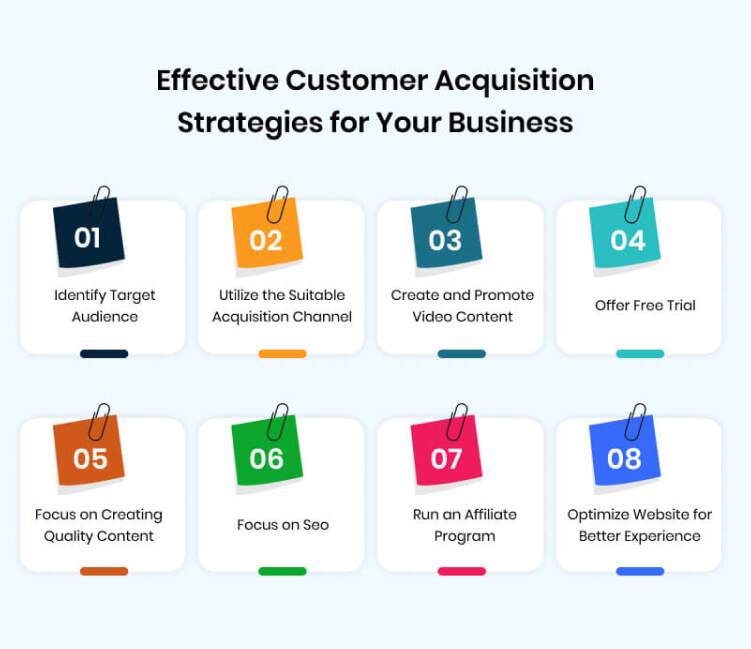
Credit: www.revechat.com
Introduction To Customer Acquisition
Customer acquisition refers to the process of bringing new customers to your business. It involves strategies and techniques aimed at attracting potential customers and converting them into loyal buyers. Effective customer acquisition is vital for business growth and sustainability.
Importance Of Customer Acquisition
Customer acquisition is crucial for any business. Without new customers, businesses cannot grow. More customers mean more revenue and profitability. Acquiring customers is essential for maintaining market share. It also helps in building a brand’s reputation.
Businesses must focus on acquiring new customers regularly. This ensures steady growth. It also helps in compensating for the customers lost over time. Effective customer acquisition strategies can lead to long-term success.
Goals And Objectives
Setting clear goals and objectives for customer acquisition is important. It helps in measuring the success of your strategies. Common goals include:
- Increasing the number of new customers
- Improving customer conversion rates
- Enhancing customer retention
Businesses should also focus on reducing customer acquisition costs. This ensures higher profitability. Another important objective is to identify the best channels for acquiring customers. This can include social media, email marketing, or search engine optimization (SEO).
Tracking performance is essential. Use metrics like Customer Acquisition Cost (CAC) and Customer Lifetime Value (CLV). These metrics help in understanding the effectiveness of your strategies. They also assist in making data-driven decisions.
| Objective | Metric |
|---|---|
| Increase new customers | Number of new customers |
| Improve conversion rates | Conversion rate percentage |
| Enhance retention | Customer retention rate |
By focusing on these goals and objectives, businesses can ensure a successful customer acquisition strategy. This leads to steady growth and long-term success.
Target Audience Identification
Identifying your target audience is crucial for effective customer acquisition. You must understand who your ideal customers are and how to reach them. This process involves defining your ideal customer and conducting thorough market research. These steps help you tailor your marketing strategies to attract the right audience.
Defining Your Ideal Customer
Start by creating a detailed profile of your ideal customer. This includes demographic information like age, gender, location, and income level. Consider psychographic data too, such as interests, values, and behaviors. Use the following table to outline key characteristics:
| Demographic | Details |
|---|---|
| Age | 25-40 years |
| Gender | Male/Female |
| Location | Urban areas |
| Income Level | Middle to high income |
Knowing your ideal customer’s profile helps you create targeted marketing campaigns. You can address their specific needs and preferences. This increases your chances of converting them into loyal customers.
Market Research Techniques
Effective market research provides insights into your target audience. It helps you understand their needs, preferences, and behavior. Here are some techniques to use:
- Surveys: Conduct online surveys to gather data directly from potential customers.
- Focus Groups: Organize focus groups to get in-depth feedback and opinions.
- Competitor Analysis: Study your competitors to identify gaps and opportunities.
- Social Media Listening: Monitor social media platforms to understand customer sentiments.
Using these techniques, you can gather valuable information. This data helps you refine your marketing strategies. You can create more personalized campaigns that resonate with your target audience.
Content Marketing Strategies
Content Marketing is a powerful way to attract new customers. By creating and sharing valuable content, you can engage your audience and build trust. This strategy helps to educate your potential customers and solve their problems. Let’s dive into some key aspects of content marketing.
Creating Valuable Content
Creating valuable content is the cornerstone of content marketing. It involves producing content that your audience finds useful. This can be blog posts, videos, infographics, or podcasts. The goal is to provide information that solves problems or answers questions.
- Identify Your Audience’s Needs: Understand what your audience is looking for. Conduct surveys or analyze feedback.
- Research Relevant Topics: Use tools like Google Trends or AnswerThePublic to find trending topics.
- Create High-Quality Content: Ensure your content is well-researched, clear, and engaging.
Seo Best Practices
SEO Best Practices help your content rank higher in search engines. This increases visibility and attracts more visitors to your site. Here are some best practices to follow:
- Keyword Research: Identify and use relevant keywords. Use tools like SEMrush or Ahrefs.
- On-Page SEO: Optimize your titles, headers, and meta descriptions. Use keywords naturally.
- Quality Backlinks: Get links from reputable websites. This boosts your site’s authority.
- Mobile Optimization: Ensure your site is mobile-friendly. This improves user experience and ranking.
- Content Updates: Regularly update your content. Fresh content helps maintain rankings.
| SEO Practice | Description |
|---|---|
| Keyword Research | Find and use relevant search terms. |
| On-Page SEO | Optimize titles, headers, and meta descriptions. |
| Quality Backlinks | Get links from reputable sites. |
| Mobile Optimization | Ensure your site is mobile-friendly. |
| Content Updates | Regularly update your content. |
Social Media Engagement
Social media engagement is a powerful customer acquisition strategy. It involves interacting with your audience on social media platforms. This approach not only drives traffic to your business but also fosters loyalty and trust. By engaging with your followers, you can convert them into customers.
Choosing The Right Platforms
Choosing the right social media platforms is critical. Different platforms serve different audiences. For instance, Facebook is great for a broad audience. LinkedIn targets professionals, while Instagram appeals to younger demographics.
To choose the right platform, consider your target audience. Where do they spend most of their time? Focus your efforts there. Also, consider the type of content you will share. Visual content performs well on Instagram and Pinterest. Text-based content is better suited for LinkedIn and Twitter.
Building A Community
Building a community around your brand is essential. It creates a sense of belonging among your followers. They are more likely to engage with your posts and share them with others.
To build a community, start by posting valuable content. This could be tips, tutorials, or news related to your industry. Encourage your followers to interact with your posts. Respond to their comments and questions promptly. This shows that you value their input.
Consider creating a group or forum. This provides a space for your followers to discuss topics related to your brand. It also allows you to interact with them directly. Over time, this can lead to stronger relationships and increased loyalty.
| Platform | Best For | Content Type |
|---|---|---|
| Broad Audience | Mixed | |
| Professionals | Text-Based | |
| Younger Demographics | Visual | |
| Visual Enthusiasts | Images | |
| Quick Updates | Text-Based |
Key Takeaways:
- Identify the right platforms based on your audience.
- Engage with followers through comments and direct messages.
- Post valuable and relevant content regularly.
- Build a community to foster loyalty.
Email Marketing Tactics
Email marketing remains a powerful tool for customer acquisition. With the right tactics, you can engage your audience and drive conversions. This section will cover essential strategies for crafting effective emails and the importance of segmentation and personalization.
Crafting Effective Emails
Creating an effective email involves several key elements. Start with a compelling subject line. It should grab the reader’s attention and make them want to open the email. Keep it short and to the point.
Next, focus on the email content. Use clear, concise language and make sure your message is easy to read. Break up text with bullet points or numbered lists to make it more digestible. Include a strong call-to-action (CTA) to encourage readers to take the desired action.
Here’s a basic structure for an effective email:
- Subject Line: Grab attention
- Opening: Brief introduction
- Main Content: Key message with bullet points
- CTA: Encourage action
Segmentation And Personalization
Segmentation and personalization are crucial for successful email marketing. Segment your email list based on specific criteria. This could include demographics, purchase history, or engagement levels.
Personalization goes beyond just using the recipient’s name. Tailor the content to their interests and needs. For example, send product recommendations based on past purchases or offer discounts on items they’ve shown interest in.
Consider these benefits of segmentation and personalization:
| Benefit | Details |
|---|---|
| Increased Engagement | Relevant content leads to higher open and click-through rates. |
| Improved Customer Experience | Personalized emails make customers feel valued and understood. |
| Higher Conversion Rates | Targeted offers and messages encourage more purchases. |
Use segmentation and personalization to deliver targeted, relevant content. This will increase engagement and drive conversions.
Paid Advertising Campaigns
Paid advertising campaigns are a powerful way to reach potential customers. They allow businesses to target specific audiences quickly and efficiently. These campaigns can be tailored to fit various marketing goals. Below, we will explore two main types of paid advertising: PPC and Social Media Ads. We will also discuss budgeting and ROI for these campaigns.
Ppc And Social Media Ads
Pay-Per-Click (PPC) advertising is one of the most popular forms of paid ads. In this model, advertisers pay each time a user clicks on their ad. PPC ads appear on search engines like Google. They can also appear on other websites that participate in ad networks.
Social Media Ads are another effective form of paid advertising. These ads appear on platforms like Facebook, Instagram, and Twitter. They help businesses reach a wide audience. Social media ads can be highly targeted. This makes them very effective.
Budgeting And Roi
Effective budgeting is crucial for a successful paid advertising campaign. Businesses need to allocate funds wisely to get the best results. Here are some tips for budgeting:
- Set a clear budget limit.
- Allocate funds based on goals and audience size.
- Monitor spending and adjust as needed.
Return on Investment (ROI) is a key metric for measuring the success of paid ads. To calculate ROI, divide the profit from the campaign by the total cost of the campaign. A high ROI means the campaign is successful. Here are some ways to improve ROI:
- Target the right audience.
- Use compelling ad copy and visuals.
- Test and optimize ad performance regularly.
By focusing on these strategies, businesses can achieve better results with their paid advertising campaigns.
Referral And Loyalty Programs
Customer acquisition is crucial for any business. One effective method is using Referral and Loyalty Programs. These programs encourage existing customers to bring in new ones and reward loyal customers. Let’s explore how you can make these strategies work for your business.
Incentivizing Referrals
Incentivizing referrals is a great way to attract new customers. When customers refer friends or family, they trust the recommendation. This trust can lead to higher conversion rates. Here’s how you can create an effective referral program:
- Offer discounts or free products to customers who refer others.
- Provide a unique referral code to each customer.
- Track referrals to ensure they are rewarded properly.
Using a table can help illustrate the benefits for both the referrer and the new customer:
| Referrer | New Customer |
|---|---|
| 10% off next purchase | 15% off first purchase |
| Free product sample | Welcome gift |
Rewarding Loyal Customers
Rewarding loyal customers keeps them coming back. It also makes them feel valued. This can lead to repeat business and long-term relationships. Consider these strategies:
- Create a points system where customers earn points for every purchase.
- Offer exclusive deals and early access to sales for loyal customers.
- Send personalized thank you notes or birthday gifts.
Here’s an example of a simple points system:
| Action | Points Earned |
|---|---|
| Every $1 spent | 1 point |
| Writing a review | 10 points |
| Referring a friend | 50 points |
Using these methods can boost customer acquisition and retention. Start small and adjust based on customer feedback. Focus on making customers feel appreciated.
Credit: mikekhorev.com
Measuring And Analyzing Success
Measuring and analyzing the success of customer acquisition strategies is crucial. It helps businesses understand what works and what doesn’t. This section will explore key performance indicators (KPIs) and the use of analytics tools to measure success.
Key Performance Indicators
Key Performance Indicators (KPIs) are metrics used to evaluate the success of your strategies. They help you track progress and achieve your goals. Here are some essential KPIs for customer acquisition:
- Customer Acquisition Cost (CAC): The cost to acquire a new customer.
- Customer Lifetime Value (CLV): The total revenue expected from a customer.
- Conversion Rate: The percentage of visitors who become customers.
- Churn Rate: The percentage of customers who stop using your service.
- Return on Investment (ROI): The profit earned from your investments.
Using Analytics Tools
Analytics tools are essential for measuring and analyzing your KPIs. They provide insights into your customer acquisition efforts. Popular tools include:
- Google Analytics: Tracks website traffic and user behavior.
- HubSpot: Offers detailed reports on marketing performance.
- Mixpanel: Analyzes user interactions with your product.
- Salesforce: Manages customer relationships and sales data.
These tools offer various features. They track user behavior, measure campaign success, and provide detailed reports. They help you make data-driven decisions and improve your strategies. Using these tools effectively can lead to better customer acquisition and higher ROI.
Here’s a comparison table of some key features:
| Tool | Features | Price |
|---|---|---|
| Google Analytics | Website traffic, user behavior | Free |
| HubSpot | Marketing reports, CRM | Varies |
| Mixpanel | User interactions, funnels | Varies |
| Salesforce | CRM, sales data | Varies |
Adapting And Iterating Strategies
Businesses need to adapt and iterate their customer acquisition strategies. This flexibility helps them meet changing market demands. It also helps stay ahead of competitors. Adapting involves making changes based on new data and trends. Iteration means refining these strategies to improve results over time.
Responding To Market Changes
Market changes impact customer behavior and preferences. Businesses should monitor these changes closely. They should adjust their strategies to stay relevant. For example, if a new social media platform becomes popular, consider using it for your marketing campaigns.
Here are some steps to respond to market changes:
- Analyze market trends: Use tools to track industry changes.
- Gather customer feedback: Listen to your customers’ needs and preferences.
- Adjust marketing channels: Focus on channels where your audience is active.
Flexibility is key. Be ready to pivot your strategy based on market shifts.
Continuous Improvement
Continuous improvement is essential for effective customer acquisition. Regularly review your strategies and make necessary adjustments. This process helps identify what works and what doesn’t. Use data and analytics to guide your decisions.
Follow these steps for continuous improvement:
- Set clear goals: Define what success looks like for your business.
- Measure performance: Use KPIs to track your progress.
- Analyze results: Look for patterns and insights in your data.
- Make adjustments: Implement changes based on your analysis.
Consistent evaluation and refinement lead to better outcomes. Stay committed to improving your customer acquisition strategies.
| Strategy | Action |
|---|---|
| Responding to Market Changes | Monitor trends, gather feedback, adjust channels |
| Continuous Improvement | Set goals, measure performance, analyze results, make adjustments |

Credit: firstpagesage.com
Conclusion And Next Steps
Effective customer acquisition strategies are vital for business growth. After exploring various methods, it’s time to summarize key points and plan for the future. This will ensure you can implement these strategies efficiently and successfully.
Summarizing Key Points
Throughout this post, we discussed several customer acquisition strategies. Let’s recap the most important ones:
- Content Marketing: Creating valuable content to attract and engage your target audience.
- Social Media Marketing: Utilizing social platforms to reach potential customers and build relationships.
- Email Marketing: Sending targeted emails to nurture leads and convert them into customers.
- SEO: Optimizing your website to improve its visibility on search engines.
- PPC Advertising: Running paid ads to drive traffic to your website.
- Referral Programs: Encouraging existing customers to refer new ones.
Planning For The Future
Now that you understand these strategies, it’s time to plan for the future. Here are the next steps:
- Analyze Your Current Efforts: Evaluate which strategies are currently working for your business.
- Set Clear Goals: Define what you want to achieve with your customer acquisition efforts.
- Create an Action Plan: Develop a detailed plan outlining how you will implement each strategy.
- Allocate Resources: Ensure you have the necessary resources, such as budget and personnel, to execute your plan.
- Monitor and Adjust: Regularly track your progress and make adjustments as needed.
By following these steps, you will be well on your way to successfully acquiring new customers and growing your business.
Frequently Asked Questions
What Are Effective Customer Acquisition Strategies?
Effective strategies include content marketing, social media marketing, email campaigns, and partnerships. Focus on providing value to attract customers.
How Does Content Marketing Help In Customer Acquisition?
Content marketing attracts potential customers by providing valuable information. It builds trust and authority, leading to customer acquisition.
Why Is Social Media Important For Customer Acquisition?
Social media helps reach a wider audience. Engaging content on social platforms can attract and convert potential customers.
How Do Email Campaigns Aid In Acquiring Customers?
Email campaigns nurture leads with personalized content. They keep potential customers engaged and guide them through the sales funnel.
Conclusion
Effective customer acquisition strategies drive business growth. Focus on understanding your audience. Tailor your approach to their needs. Test various strategies to find what works best. Measure results consistently. Stay adaptable to market changes. Utilize social media, email marketing, and content creation.
Build relationships and trust. Keep refining your methods. Success comes with persistence and effort. Growing your customer base requires patience and dedication. Implement these strategies to see positive results. Your business can thrive with the right approach.
