

Starting a blog can be exciting and challenging. You need the right tips to succeed.
Blogging is more than just writing; it’s about connecting with your audience. The right strategies can help you build a strong online presence. Blogging is a powerful tool for sharing your ideas and expertise. It’s a way to reach people globally and create a community around your content.
Whether you’re a beginner or looking to improve, certain tips can make your journey smoother. Good blogging practices help you engage readers and keep them coming back. From creating compelling content to promoting your blog effectively, these tips will guide you. Let’s explore how you can make your blog stand out and achieve your goals.
Crafting Captivating Headlines
Creating engaging headlines is essential for successful blogging. A captivating headline grabs attention and encourages readers to click and read more. Here are some tips to help you craft headlines that stand out.
Use Power Words
Power words are strong, emotional words that provoke a response. They can make your headlines more compelling and interesting.
- Exclusive
- Ultimate
- Essential
- Proven
- Free
Power words can evoke curiosity, excitement, or urgency. They make the reader feel like they must read your post.
Incorporate Numbers
Numbers in headlines catch the eye and provide a clear expectation. They can make your content seem more organized and easier to read.
| Type of Headline | Example |
|---|---|
| List | 10 Tips for Better Blogging |
| Steps | 5 Steps to Craft Perfect Headlines |
| Statistics | 3 Out of 5 Bloggers Use These Tips |
Using numbers can make your headline seem more specific and credible. It also gives a clear idea of the content’s structure.
Optimizing For Seo
Optimizing your blog for SEO is essential to increase your online visibility. By focusing on SEO, you can attract more readers and improve your search engine ranking. Here are some key aspects to consider.
Keyword Research
Keyword research is the foundation of SEO. It helps you understand what your audience is searching for. Using the right keywords ensures that your content reaches the intended audience.
Follow these steps for effective keyword research:
- Identify the main topic of your blog post.
- Use tools like Google Keyword Planner or Ubersuggest.
- Look for keywords with high search volume and low competition.
- Include both short-tail and long-tail keywords.
Remember to use your primary keyword in the title, headings, and content. This practice improves your chances of ranking higher in search results.
On-page Optimization
On-page optimization involves optimizing individual pages to rank higher. This includes both the content and HTML source code of a page.
Key elements of on-page optimization:
- Title Tag: Include your primary keyword in the title. Keep it under 60 characters.
- Meta Description: Write a compelling meta description. Include your primary keyword. Keep it under 160 characters.
- Headings: Use H1, H2, and H3 tags to structure your content. Include keywords in headings.
- Content: Write high-quality, informative content. Use keywords naturally.
- URL Structure: Use clean and descriptive URLs. Include your primary keyword.
- Internal Links: Link to other relevant pages on your site. This helps search engines understand the structure of your site.
- Image Optimization: Use descriptive file names and alt text for images. Include keywords where relevant.
By focusing on these elements, you can improve your blog’s visibility and attract more readers.
Creating Quality Content
Creating quality content is crucial for successful blogging. Quality content helps engage your readers and keeps them coming back for more. By understanding your audience and providing value, you can create content that resonates well. Let’s delve into some key aspects of creating quality content.
Know Your Audience
Understanding your audience is the first step in creating quality content. Knowing their preferences and interests ensures your content is relevant.
- Identify their demographics: age, location, and interests.
- Understand their pain points and challenges.
- Analyze their behavior: what content do they engage with?
Use tools like Google Analytics to gather insights. Create reader personas to visualize your audience. This helps tailor your content to their needs.
Provide Value
Valuable content keeps readers engaged and encourages them to return. Provide solutions, insights, and useful information.
- Create informative articles that answer common questions.
- Share practical tips and how-to guides.
- Offer unique perspectives on trending topics.
Always aim to educate, entertain, or inspire your readers. The goal is to make their time on your blog worthwhile.
| Aspect | Description |
|---|---|
| Relevance | Content must match your audience’s interests. |
| Clarity | Write in simple, easy-to-understand language. |
| Value | Provide information that solves problems or adds knowledge. |
By knowing your audience and providing value, you create engaging and quality content. This builds a loyal readership and enhances your blog’s success.
Utilizing Social Media
Social media is an essential tool for bloggers. It helps in promoting content and engaging with readers. Using social media wisely can increase blog traffic and build a loyal audience.
Share Strategically
To maximize reach, share your blog posts at optimal times. Different platforms have different peak times. Research and find the best times to post on each platform. Use tools like Hootsuite or Buffer to schedule posts.
Include a mix of content types. Share blog links, images, and short updates. Visual content often gets more engagement. Use eye-catching images and short video clips to draw attention.
Use platform-specific features. For instance, use Instagram Stories to give a sneak peek of your blog post. On Facebook, create events for live sessions discussing your latest post.
Engage With Followers
Engagement is key to building a community. Respond to comments and messages promptly. Show your readers that you value their input.
Ask questions to encourage interaction. Simple questions related to your blog post can spark conversation. For example, if you wrote about a travel destination, ask your readers about their favorite travel spots.
Host giveaways and contests. These can boost engagement and attract new followers. Ensure the prizes are relevant to your blog niche.
Create polls and surveys. These tools help you understand your audience’s preferences. Use the feedback to tailor future content.
Below is a simple table showing the best times to post on major social media platforms:
| Platform | Best Time to Post |
|---|---|
| 1-4 PM | |
| 12-3 PM | |
| 2-4 PM | |
| 10-11 AM |
Use these times as a guide. Adjust based on your audience’s behavior.
Leveraging Email Marketing
Email marketing is a powerful tool for bloggers. It helps you stay connected with your audience. By leveraging email marketing, you can keep your readers engaged and drive more traffic to your blog. In this section, we will explore key tips for leveraging email marketing effectively.
Build An Email List
Building an email list is crucial for email marketing success. Here are some steps to help you get started:
- Create a sign-up form: Place it on your blog’s homepage and other high-traffic pages.
- Offer incentives: Provide a free eBook, discount, or exclusive content to encourage sign-ups.
- Use pop-ups: Pop-up forms can capture visitors’ attention and increase sign-ups.
- Promote on social media: Share your sign-up form on your social media profiles.
Remember, building an email list takes time. Be patient and persistent.
Craft Effective Newsletters
Once you have a list, the next step is crafting effective newsletters. Here’s how to do it:
| Tips | Description |
|---|---|
| Engaging Subject Lines | Write catchy subject lines to increase open rates. |
| Personalize Content | Use the recipient’s name and tailor content to their interests. |
| Keep it Short | Make newsletters concise and easy to read. |
| Include Call-to-Actions | Encourage readers to visit your blog or share your content. |
| Mobile-Friendly Design | Ensure your newsletters look great on mobile devices. |
Effective newsletters can keep your audience engaged. They can also drive traffic to your blog.

Credit: venngage.com
Enhancing User Experience
Enhancing user experience is crucial for a successful blog. It keeps readers engaged and encourages them to return. Here are some key strategies to ensure your blog is user-friendly and appealing.
Mobile-friendly Design
More people are using mobile devices to browse the internet. Your blog must have a mobile-friendly design. This means it should adapt to different screen sizes. Ensure fonts are readable and buttons are easy to tap. Use responsive design techniques. Here’s a quick checklist:
- Use a responsive theme.
- Optimize images for faster loading.
- Ensure text is readable without zooming.
- Avoid using Flash.
Fast Loading Times
Users expect your blog to load quickly. If it takes too long, they leave. Fast loading times improve user experience and SEO. Here are some tips:
- Optimize images to reduce file size.
- Use a Content Delivery Network (CDN).
- Minimize HTTP requests.
- Enable browser caching.
- Reduce server response time.
| Tip | Description |
|---|---|
| Optimize Images | Compress images to reduce file size without losing quality. |
| Use a CDN | Distribute content to servers closer to your users. |
| Minimize HTTP Requests | Reduce the number of elements on your page. |
| Enable Browser Caching | Store resources locally to load pages faster on repeat visits. |
| Reduce Server Response Time | Improve your server’s performance and reduce delays. |
Encouraging Reader Interaction
Encouraging reader interaction is vital for a successful blog. It helps create a community and boosts engagement. By making your readers feel valued, they are more likely to return and participate. Let’s explore some effective ways to encourage reader interaction.
Enable Comments
Enabling comments on your blog allows readers to share their thoughts. It creates a two-way communication channel. Readers can ask questions, provide feedback, and share their experiences. This makes your blog more interactive and engaging.
To enable comments, ensure your blog platform supports this feature. Most platforms like WordPress have built-in options. Go to your settings and turn on the comment feature. Make sure to moderate comments to keep the discussion respectful and on-topic.
Benefits of enabling comments:
- Encourages reader participation
- Provides valuable feedback
- Builds a sense of community
Ask Questions
Asking questions is a powerful way to engage readers. It prompts them to think and respond. This can lead to lively discussions in the comments section.
Include questions at the end of your posts. For example, “What do you think about this topic?” or “Have you tried this method?” These questions invite readers to share their opinions and experiences.
Examples of engaging questions:
| Blog Topic | Engaging Question |
|---|---|
| Travel Tips | What is your favorite travel destination? |
| Cooking Recipes | Have you tried this recipe? How was it? |
| Fitness Routine | What is your go-to workout? |
Encouraging readers to answer questions fosters a sense of involvement. It also helps you understand your audience better. This can guide you in creating more relevant content in the future.

Credit: www.shoutmeloud.com
Analyzing Performance
To grow your blog, you must analyze its performance. This helps you understand what works and what doesn’t. You can then improve your content, engage readers, and boost traffic. Here are some key steps to help you analyze your blog’s performance effectively.
Monitor Traffic
Use tools like Google Analytics to track your blog’s traffic. You can see how many visitors your blog receives. You can also learn where they come from and what pages they visit.
Look at these metrics:
- Pageviews: The total number of pages viewed.
- Unique visitors: The number of individual visitors.
- Average session duration: The average time a visitor spends on your blog.
- Bounce rate: The percentage of visitors who leave after viewing one page.
Pay attention to trends. If traffic spikes after a new post, it might be popular. If it drops, you might need to change your strategy.
Adjust Strategies
Based on your traffic data, you can adjust your strategies. Here are some tips:
- Optimize content: Improve your headlines and add keywords. Make sure your content is easy to read.
- Promote posts: Share your posts on social media. Engage with your audience to increase visibility.
- Update old content: Revise and update old posts. This keeps them relevant and boosts SEO.
- Improve user experience: Make your blog mobile-friendly. Ensure fast loading times and a clean layout.
Regularly review your blog’s performance. Keep experimenting with new strategies. This will help you find what works best for your audience.
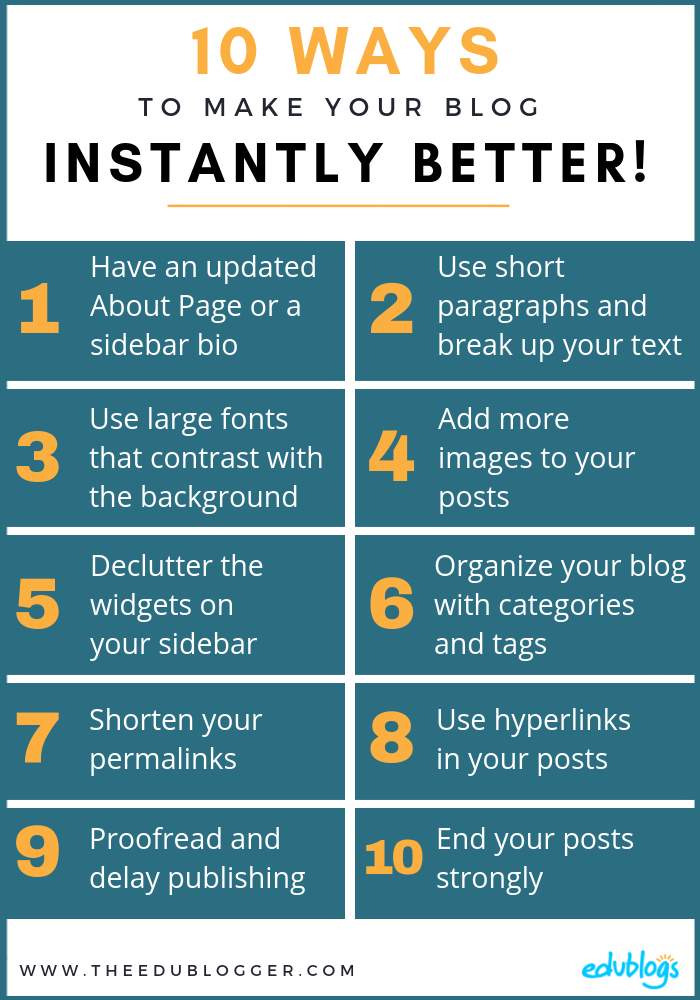
Credit: www.theedublogger.com
Frequently Asked Questions
How Do I Start A Blog?
Starting a blog is simple. Choose a niche, pick a platform, and create quality content. Consistency is key.
What Are The Best Blogging Platforms?
Popular blogging platforms include WordPress, Blogger, and Medium. Choose one that suits your needs and preferences.
How Often Should I Blog?
Aim to blog at least once a week. Consistent posting helps build audience engagement and improves SEO rankings.
How Can I Drive Traffic To My Blog?
Promote your blog on social media, use SEO techniques, and engage with your audience. Quality content attracts readers.
Conclusion
Blogging can be fun and rewarding. Use these tips to improve your blog. Consistent posting attracts more readers. Engage with your audience through comments. Clear, concise writing keeps readers interested. Don’t forget to share your posts on social media. Keep learning and adapting your strategies.
Practice makes perfect. Happy blogging!