

Conversion optimization is crucial for any online business. It helps turn website visitors into paying customers.
Imagine having a website with high traffic but low sales. Frustrating, right? Conversion optimization is the solution you need. It focuses on enhancing your website’s performance to boost conversions. This means more leads, more sales, and a healthier bottom line.
In this blog post, we will explore 11 effective conversion optimization strategies. These techniques will help you understand your audience better and improve their journey on your site. Get ready to learn actionable tips that can make a big difference in your online success. Let’s dive in!

Credit: www.movate.com
Introduction To Conversion Optimization
Conversion Optimization is a key strategy for improving the effectiveness of your website. It focuses on turning visitors into customers or leads. This strategy involves several techniques to boost the performance of your site.
Importance Of Conversion Rates
The conversion rate measures how many visitors complete a desired action. This action could be making a purchase or signing up for a newsletter. High conversion rates indicate that your website is effective.
Understanding conversion rates helps you make data-driven decisions. It shows what works and what doesn’t. By improving conversion rates, you can maximize your marketing efforts. This leads to higher revenue and better user satisfaction.
Common Conversion Metrics
Tracking the right metrics is essential for successful conversion optimization. Here are some common metrics to consider:
- Click-Through Rate (CTR): Measures the percentage of visitors who click on a link.
- Bounce Rate: Indicates the percentage of visitors who leave the site after viewing only one page.
- Average Session Duration: Shows how long visitors stay on your site.
- Pages Per Session: Indicates the number of pages a visitor views in one session.
- Conversion Rate: The percentage of visitors who complete the desired action.
These metrics give insights into user behavior. They help identify areas for improvement on your website. By focusing on these metrics, you can enhance user experience and increase conversions.
Understanding Your Audience
Understanding your audience is crucial for effective conversion optimization. Knowing who your customers are helps tailor your strategies. This increases engagement and boosts conversions. Let’s delve into some key aspects of understanding your audience.
Identifying Target Demographics
The first step is identifying your target demographics. This involves understanding the age, gender, location, and income level of your audience. Start by gathering data from various sources such as:
- Google Analytics
- Social Media Insights
- Customer Surveys
Creating a customer persona can also help. Here is a simple table to illustrate:
| Attribute | Details |
|---|---|
| Age | 25-34 |
| Gender | Female |
| Location | Urban Areas |
| Income Level | Middle to High |
Identifying these details helps craft more personalized content and offers. This leads to better engagement.
Analyzing Customer Behavior
Next is analyzing customer behavior. This involves studying how users interact with your site. Look at:
- Page Views
- Click-Through Rates
- Time Spent on Site
Heatmaps can also be useful. They show where users click and scroll the most. This data helps identify popular sections and areas needing improvement.
Another key aspect is understanding the customer journey. Track each step from awareness to purchase. This helps identify drop-off points and optimize them.
Use tools like:
- Google Analytics
- Hotjar
- Crazy Egg
These tools provide insights into user behavior. This information is crucial for improving conversion rates.
Effective Landing Pages
Creating effective landing pages is crucial for conversion optimization. A landing page should capture attention and prompt visitors to take action. This involves a mix of good design, clear messaging, and strategic elements.
Design Principles
Good design principles ensure your landing page is visually appealing and easy to navigate. Here are some key points to consider:
- Clarity: Keep the design simple and avoid clutter.
- Visual Hierarchy: Use size, color, and placement to guide the user’s eye.
- Consistency: Maintain a consistent look throughout the page.
- Mobile-Friendly: Ensure the page looks good on all devices.
Call To Action Strategies
The call to action (CTA) is the most important part of a landing page. It tells visitors what to do next. Here are some strategies to make it effective:
- Clear Language: Use simple and direct words.
- Visibility: Place the CTA button where it is easily seen.
- Urgency: Create a sense of urgency with words like “now” or “today”.
- Testing: A/B test different CTAs to see what works best.
By following these design principles and CTA strategies, you can create effective landing pages that drive conversions.
A/b Testing Techniques
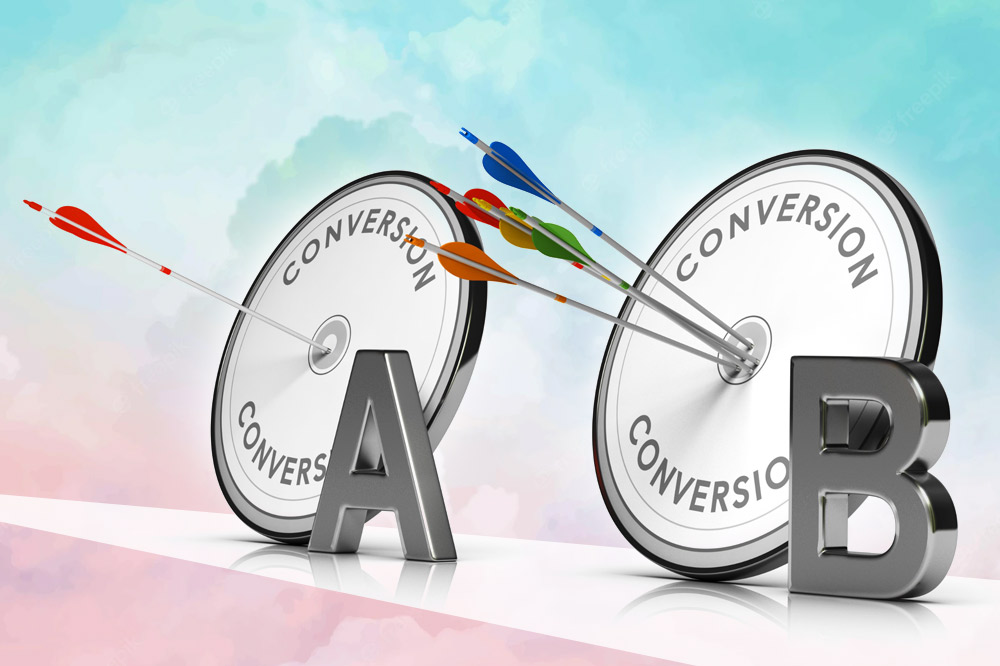
A/B Testing Techniques are essential for improving conversion rates. This involves comparing two versions of a webpage to see which one performs better. By using A/B testing, you can make data-driven decisions that increase your website’s effectiveness.
Setting Up Tests
Before starting an A/B test, define clear goals. What do you want to improve? It could be the click-through rate or sales. Once your goal is set, create two versions of the webpage. Version A is the control, and Version B is the variation.
Use a reliable A/B testing tool like Google Optimize or Optimizely. These tools will help you split your audience into two groups. One group sees Version A, and the other group sees Version B.
Ensure that the test runs for a sufficient time. A few days may not provide accurate results. Aim for at least two weeks. This ensures that you gather enough data to make a valid comparison.
Interpreting Results
After the test ends, analyze the results. Look at the key metrics you set at the beginning. Did Version B perform better than Version A?
Use a statistical significance calculator to determine if the results are reliable. A result is statistically significant if it is unlikely to have occurred by chance. Most tools will provide this information.
If Version B outperforms Version A, implement the changes permanently. If not, consider running another test. Continuous testing and optimization are key to improving your conversion rates.
Optimizing Mobile Experience
Optimizing the mobile experience is crucial for conversion optimization. With more users accessing websites on mobile devices, it’s important to ensure that your site provides a seamless experience. This section covers essential strategies to optimize your mobile experience, focusing on responsive design and mobile-specific calls to action (CTAs).
Responsive Design
A responsive design ensures your website looks great on any device. It adjusts the layout and content based on the screen size. This helps users navigate your site easily, whether they are on a smartphone, tablet, or desktop.
Here are key elements for a responsive design:
- Fluid grid layouts
- Flexible images
- Media queries
Fluid grid layouts allow your content to resize proportionally. Flexible images scale with the screen size, ensuring they don’t overflow or become distorted. Media queries apply CSS rules based on the device’s characteristics, such as screen width.
Testing your website on different devices is essential. Use tools like Google’s Mobile-Friendly Test to identify and fix issues. A responsive design improves user experience, leading to higher engagement and conversions.
Mobile-specific Ctas
Mobile-specific CTAs are tailored for mobile users. They are easy to tap and clearly visible on small screens.
Consider these tips for effective mobile CTAs:
- Use large, clickable buttons
- Place CTAs above the fold
- Use concise, action-oriented text
Large, clickable buttons reduce the chance of user errors. Placing CTAs above the fold ensures they are visible without scrolling. Concise, action-oriented text encourages users to take immediate action.
Here is an example of a mobile-specific CTA button:
Sign Up NowBy optimizing your mobile CTAs, you enhance user experience and drive more conversions.
Credit: alecanmarketing.com
Utilizing Social Proof
Social proof is a powerful tool in conversion optimization. It helps build trust with potential customers. People tend to follow the actions of others, especially when they are uncertain. Leveraging social proof can increase your conversion rates significantly. Here are some effective ways to use social proof on your website:
Customer Testimonials
Customer testimonials are powerful. They provide real feedback from satisfied customers. Displaying these testimonials on your website can help build trust. New visitors feel more confident in making a purchase. Here are a few ways to present testimonials effectively:
- Use quotes from happy customers.
- Include the customer’s name and photo.
- Highlight specific benefits or outcomes.
For example:
“This product changed my life! Highly recommend it to anyone.” – Jane Doe
Case Studies
Case studies provide in-depth insights into how your product or service helped a customer. They offer a detailed story of success. Case studies can be more convincing than testimonials because they show a complete journey. Here are some elements to include in a case study:
- Customer’s problem or challenge.
- Solution provided by your product or service.
- Results achieved after using your product.
Creating a dedicated page for case studies can be beneficial. It allows potential customers to explore success stories in detail.
| Element | Description |
|---|---|
| Problem | The challenge faced by the customer. |
| Solution | How your product solved the problem. |
| Results | Positive outcomes after using the product. |
By using customer testimonials and case studies, you can effectively leverage social proof. This can lead to increased trust and higher conversion rates on your website.
Enhancing User Experience
Conversion optimization is vital for improving your website’s performance. One key aspect is enhancing user experience. A positive user experience leads to higher engagement, lower bounce rates, and more conversions. Let’s explore some effective strategies for enhancing user experience.
Simplifying Navigation
A clear and simple navigation structure helps users find what they need quickly. Use straightforward labels for menu items. Ensure the menu is easy to locate and use. Consider a drop-down menu for organizing content into categories.
- Use clear labels for menu items.
- Implement a drop-down menu for better organization.
- Ensure the menu is visible on all pages.
Simplifying navigation reduces frustration. It helps users find information efficiently.
Improving Page Load Speed
Page load speed is critical for a good user experience. Slow loading pages can drive users away. Here are some ways to improve page load speed:
- Optimize images by reducing their size.
- Minimize the use of heavy scripts.
- Enable browser caching.
- Use a content delivery network (CDN).
A faster website keeps users engaged. It also improves your search engine ranking.
Here is a simple table showing the impact of page load speed on user experience:
| Page Load Time | User Bounce Rate |
|---|---|
| 1-3 seconds | 32% |
| 3-5 seconds | 90% |
| 5+ seconds | 123% |
Improving page load speed is essential. It enhances user experience and increases conversion rates.
Effective Use Of Analytics
Analytics are crucial for conversion optimization. They help you understand your audience’s behavior. By leveraging data, you can make informed decisions to improve your website’s performance.
Tracking Key Metrics
Tracking key metrics is essential for conversion optimization. Here are some important metrics to track:
- Conversion Rate: The percentage of visitors who complete the desired action.
- Bounce Rate: The percentage of visitors who leave after viewing only one page.
- Average Session Duration: The average time a visitor spends on your site.
- Pages Per Session: The average number of pages viewed during a session.
- Exit Rate: The percentage of visitors who leave from a specific page.
Using these metrics, you can gauge the effectiveness of your website. This helps identify areas for improvement.
Making Data-driven Decisions
Data-driven decisions are critical for optimizing conversions. Here are some steps to follow:
- Analyze the Data: Review the tracked metrics to identify patterns and trends.
- Identify Issues: Look for high bounce rates or low conversion rates.
- Form Hypotheses: Based on the data, develop hypotheses about potential issues.
- Test Solutions: Implement A/B tests to determine the most effective changes.
- Monitor Results: Track the impact of changes using your key metrics.
Regularly analyze data to refine your strategies. This ensures continuous improvement in your conversion rates.
| Metric | Importance |
|---|---|
| Conversion Rate | Measures success of conversion efforts |
| Bounce Rate | Indicates user engagement |
| Average Session Duration | Shows the quality of user experience |
| Pages Per Session | Reflects user interest in content |
| Exit Rate | Helps identify problematic pages |
Using analytics effectively can transform your conversion optimization efforts. Track key metrics and make data-driven decisions. This will help you achieve higher conversion rates and improve user experience.
Personalization Strategies
Personalization Strategies are essential for conversion optimization. By tailoring content to individual users, businesses can improve user experience and increase sales. Personalization involves using data to create customized experiences. This blog will explore two key strategies: Dynamic Content and Personalized Recommendations.
Dynamic Content
Dynamic content changes based on user behavior and preferences. It can include text, images, and videos. This strategy helps create a unique experience for each visitor. Here are some examples:
- Showing location-based offers
- Displaying products based on browsing history
- Adapting content to the user’s device
To implement dynamic content, businesses can use tools like A/B testing and user segmentation. These tools help identify what works best for different audiences. Creating dynamic content requires continuous monitoring and adjustment.
Personalized Recommendations
Personalized recommendations suggest products or content based on user data. This can be done through algorithms that analyze user behavior. Common examples include:
- Product suggestions based on past purchases
- Content recommendations based on reading history
- Email campaigns with tailored offers
These recommendations increase the likelihood of conversions. They make the user feel understood and valued. To enhance personalized recommendations, businesses can use machine learning algorithms. These algorithms improve over time, providing more accurate suggestions.
| Strategy | Benefits | Tools |
|---|---|---|
| Dynamic Content | Enhanced user experience, higher engagement | A/B testing, user segmentation |
| Personalized Recommendations | Increased sales, user retention | Machine learning, data analysis |
Both dynamic content and personalized recommendations are powerful tools. They help create a more engaging and relevant user experience. Implementing these strategies can significantly boost conversion rates.
Leveraging Email Marketing
Leveraging Email Marketing is one of the most effective ways to boost your conversion rates. With a well-planned strategy, you can engage your audience, nurture leads, and drive more sales. Email marketing allows you to communicate directly with your audience, delivering personalized content that resonates with them.
Segmenting Your Audience
Segmenting your audience is crucial for effective email marketing. By dividing your email list into smaller groups, you can send targeted messages that meet each segment’s needs.
- Demographic segmentation: Group your audience based on age, gender, income, or location.
- Behavioral segmentation: Segment based on past purchase behavior, website interactions, or email engagement.
- Psychographic segmentation: Divide your audience by interests, values, and lifestyle choices.
Using these segments, you can create personalized content that speaks directly to each group’s interests and needs.
Crafting Effective Campaigns
Crafting effective campaigns requires a blend of creativity and strategy. Here are key steps to ensure your campaigns succeed:
- Define your goals: Know what you want to achieve with your email campaign. This could be increasing sales, driving website traffic, or boosting engagement.
- Create compelling subject lines: Your subject line should grab attention and encourage recipients to open the email. Keep it short and to the point.
- Personalize your content: Use the recipient’s name and tailor the message to their preferences and past behavior.
- Include a clear call-to-action (CTA): Make sure your CTA is prominent and easy to understand. It should guide the reader on what to do next.
- Test and optimize: Use A/B testing to find out what works best. Test different subject lines, content, and CTAs to improve your results.
By following these steps, you can create email campaigns that engage your audience and drive conversions.
Measuring Success
Conversion optimization is key for any online business. But how do you know if your strategies are working? Measuring success is crucial. It lets you see what is working and what needs improvement. This section will cover how to measure success effectively.
Key Performance Indicators
Key Performance Indicators (KPIs) help measure the success of your conversion optimization efforts. KPIs are specific metrics that give insights into performance.
Here are some essential KPIs to track:
- Conversion Rate: The percentage of visitors who complete a desired action.
- Bounce Rate: The percentage of visitors who leave after viewing only one page.
- Average Order Value (AOV): The average amount spent per order.
- Customer Lifetime Value (CLV): The total revenue a business can expect from a single customer.
- Click-Through Rate (CTR): The percentage of people who click on a link compared to those who see it.
Tracking these KPIs helps you understand your audience better. It shows you where improvements are needed.
Continuous Improvement
Continuous improvement is vital for conversion optimization. This approach means regularly reviewing and refining strategies.
Follow these steps for continuous improvement:
- Analyze Data: Regularly check your KPIs to identify trends and issues.
- Test Changes: Implement small changes and run A/B tests to see their impact.
- Gather Feedback: Use surveys and feedback forms to understand customer preferences.
- Iterate: Based on data and feedback, make necessary adjustments.
Continuous improvement ensures your strategies stay effective. It keeps you aligned with your business goals.
In summary, measuring success in conversion optimization requires tracking KPIs and a commitment to continuous improvement. This method helps you stay ahead and achieve better results.
Credit: academy.gempages.net
Frequently Asked Questions
What Is Conversion Optimization?
Conversion optimization is the process of increasing the percentage of visitors who take a desired action on a website. This can include actions like making a purchase, signing up for a newsletter, or filling out a form. The goal is to improve the user experience and increase overall conversions.
Why Is Conversion Optimization Important?
Conversion optimization is important because it helps maximize the return on investment for marketing efforts. By improving the website’s effectiveness, businesses can achieve more conversions without increasing traffic. This leads to higher revenue and better customer satisfaction.
How Do You Measure Conversion Rate?
Conversion rate is measured by dividing the number of conversions by the total number of visitors. Multiply this result by 100 to get a percentage. For example, if a website has 50 conversions out of 1,000 visitors, the conversion rate is 5%.
What Are Common Conversion Optimization Techniques?
Common techniques include A/B testing, improving website speed, optimizing call-to-action buttons, and simplifying the checkout process. These methods help enhance the user experience and encourage visitors to complete desired actions.
Conclusion
Conversion optimization boosts your website’s performance and profits. Focus on user experience and data analysis. Test different strategies and track results. Small changes can lead to big improvements. Keep refining your approach for better outcomes. Your goal is to turn visitors into customers.
Stay patient and persistent in your efforts. Over time, you will see positive results. Effective conversion optimization is an ongoing process. Always aim for continuous improvement.