

Customer journey mapping is a powerful tool for understanding your customers. It helps visualize their interactions with your brand.
This way, you can improve their overall experience. Every business wants to connect with its customers on a deeper level. Customer journey mapping provides a clear picture of how customers interact with your products or services. It highlights their needs, pain points, and moments of delight.
By mapping these interactions, you can identify areas for improvement. This process allows you to create a more seamless and enjoyable customer experience. Understanding these journeys is crucial for customer satisfaction and loyalty. With this map, you can make informed decisions that benefit both your customers and your business. Ready to dive in and learn more? Let’s explore the world of customer journey mapping.
Credit: www.nngroup.com
Introduction To Customer Journey Mapping
Understanding your customers’ journey is crucial for business success. Customer Journey Mapping helps you visualize the entire experience. It tracks the path your customers take from the first interaction to the final purchase. This process can reveal pain points and opportunities for improvement. By mapping out the journey, you can better meet your customers’ needs and expectations.
What Is Customer Journey Mapping?
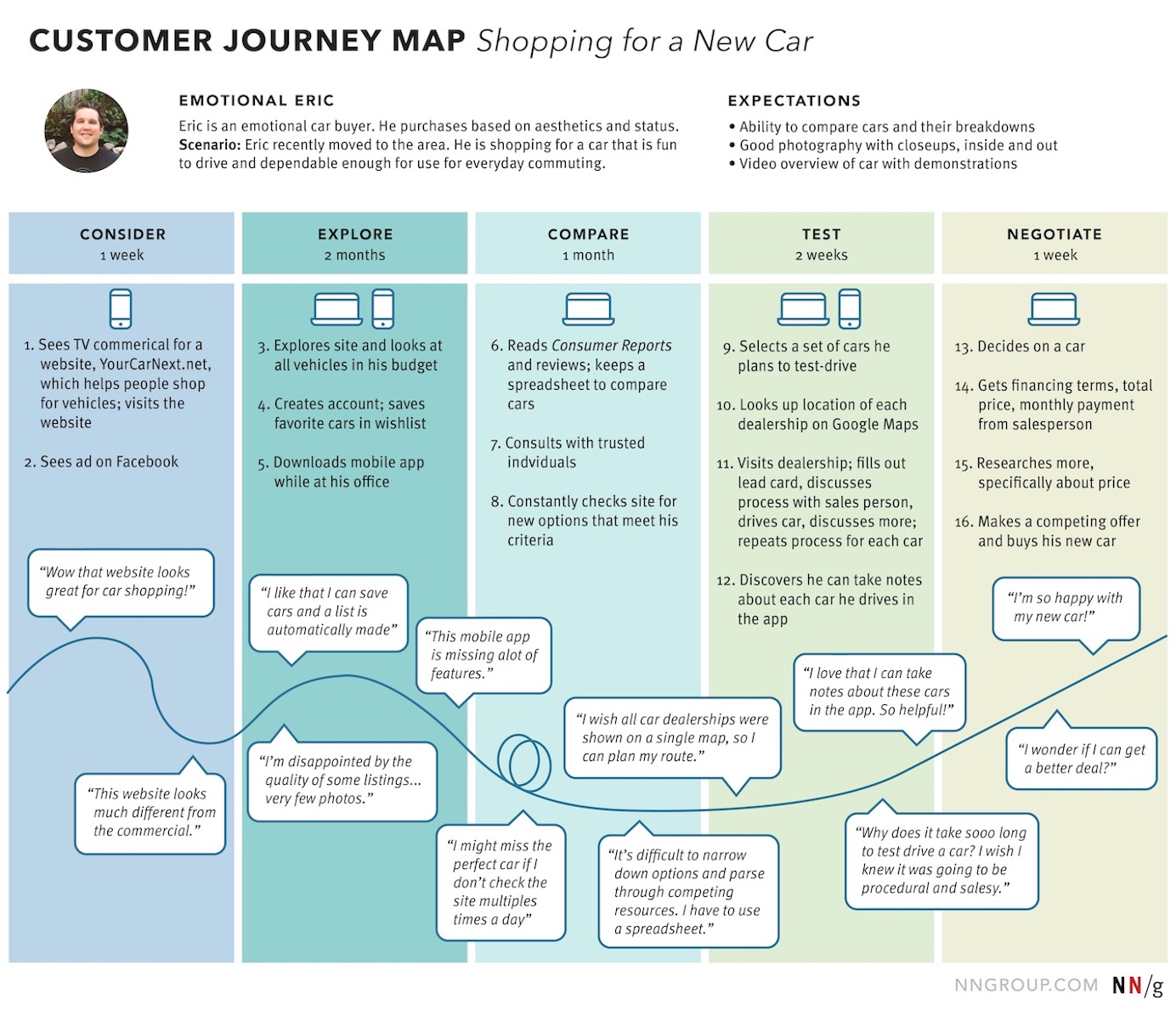
Customer Journey Mapping is a visual representation of the steps a customer takes. It includes all touchpoints and interactions with your brand. This map outlines the entire customer experience, from awareness to post-purchase. It helps businesses understand their customers’ needs, emotions, and behaviors at each stage.
Importance Of Customer Journey Mapping
Customer Journey Mapping is essential for several reasons:
- Identifies pain points: It reveals where customers encounter problems.
- Improves customer experience: Helps create a smoother journey.
- Enhances customer satisfaction: Satisfied customers are more likely to return.
- Increases conversions: A better journey leads to higher conversion rates.
- Aligns teams: Ensures everyone understands the customer experience.
By understanding these aspects, businesses can make informed decisions. They can improve their strategies and processes, leading to better customer relationships and increased loyalty.
Key Components
Understanding the key components of Customer Journey Mapping is crucial for businesses. By recognizing these elements, companies can better cater to their customers’ needs. This section delves into the essential parts of a customer journey map.
Touchpoints
Touchpoints are the moments where customers interact with your brand. These can be through various channels such as:
- Website visits
- Social media interactions
- Customer service calls
- In-store experiences
Each touchpoint provides valuable insights into the customer experience. Identifying and analyzing these interactions helps in improving customer satisfaction and loyalty.
Customer Personas
Customer personas are fictional characters representing different user types. They help in understanding the diverse needs and behaviors of your audience. A typical customer persona includes:
| Attribute | Description |
|---|---|
| Demographics | Age, gender, income, etc. |
| Goals | What they aim to achieve |
| Challenges | Problems they face |
Using these personas, companies can tailor their strategies to meet specific customer needs.
Emotions And Pain Points
Understanding customer emotions and pain points is vital. These elements reveal what customers feel during their journey with your brand. Some common emotions include:
- Frustration
- Happiness
- Trust
Pain points are the problems customers encounter. Addressing these issues enhances the overall customer experience. By focusing on emotions and pain points, businesses can create more empathetic and effective solutions.
Steps To Create A Customer Journey Map
Creating a customer journey map is crucial for understanding your customers’ experiences. It helps businesses identify pain points, improve interactions, and enhance customer satisfaction. Below are the essential steps to create an effective customer journey map.
Set Clear Objectives
Begin by defining the goals of your customer journey map. Ask yourself what you want to achieve. Are you aiming to improve customer service? Or are you focused on enhancing the buying process? Clear objectives will guide you through the mapping process.
Gather Customer Data
Collect data from various sources to understand your customers better. Use surveys, interviews, and feedback forms. This data will provide insights into customer behavior and preferences. Look at quantitative data like purchase history and website analytics too.
Identify Customer Touchpoints
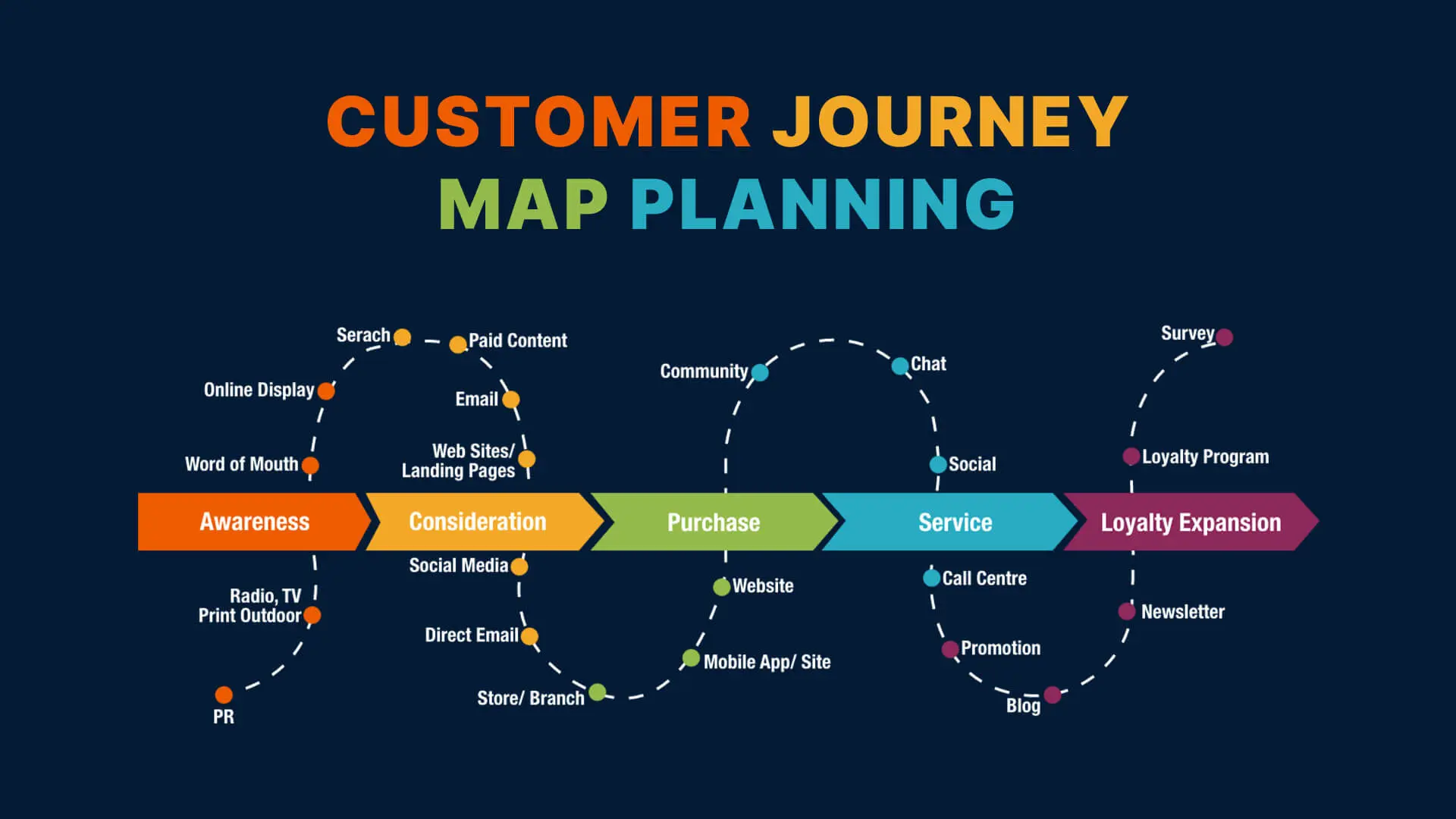
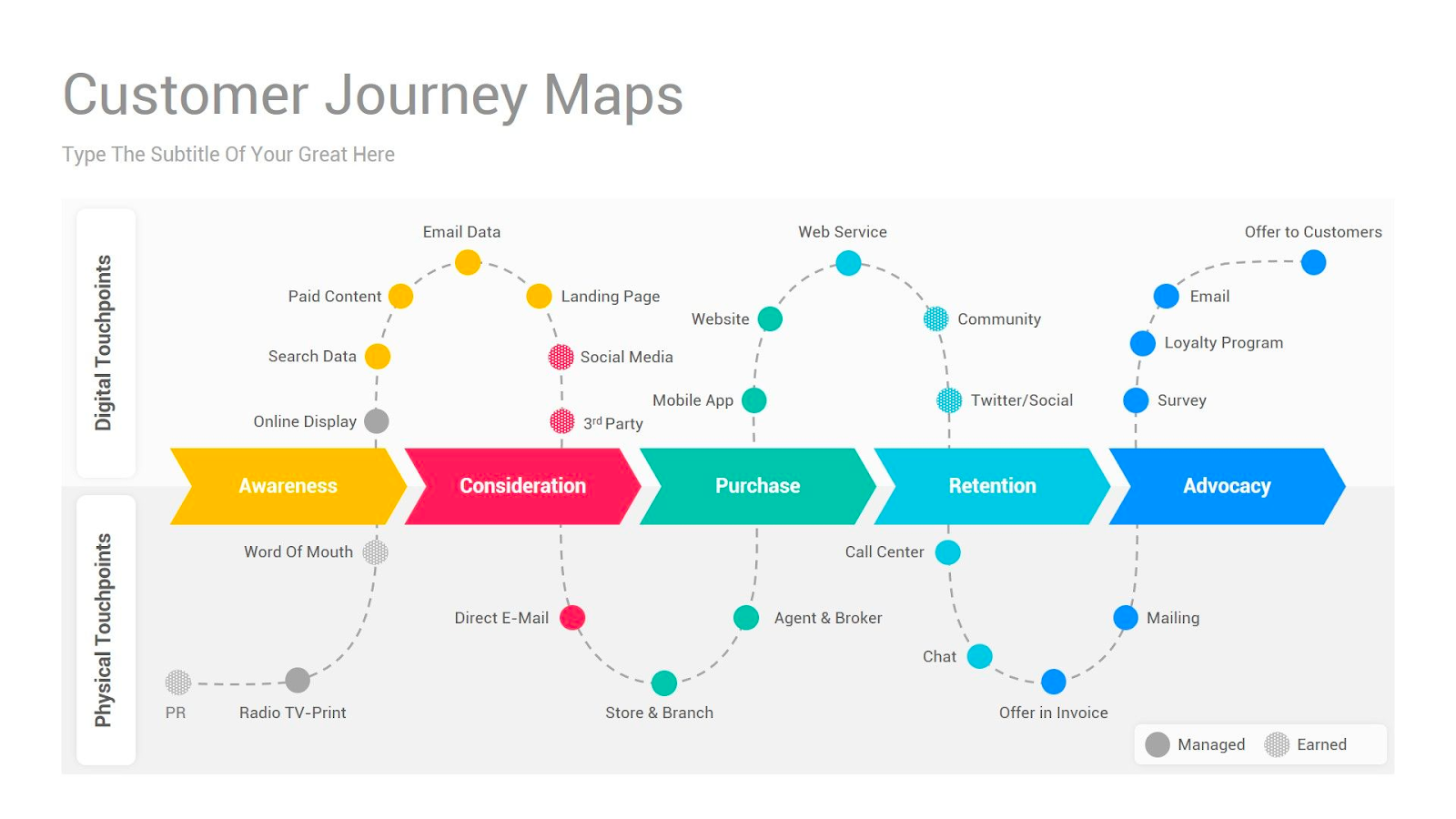
List all the points where customers interact with your brand. This includes visits to your website, social media interactions, and customer service calls. Identify every touchpoint to ensure a comprehensive map.
| Touchpoint | Description |
|---|---|
| Website Visit | Customers visit your website to browse products or services. |
| Social Media | Interactions on platforms like Facebook, Twitter, and Instagram. |
| Customer Service | Calls or emails to your support team. |
Create A Visual Map
Use a visual tool to create your customer journey map. Tools like flowcharts or diagrams can help. Ensure the map is easy to understand. Highlight key stages and touchpoints. Use colors and symbols to differentiate between them.
Below is a simple example:
1. Awareness: Customer sees your ad on social media.
2. Consideration: Customer visits your website.
3. Purchase: Customer buys a product.
4. Support: Customer contacts support for help.
5. Loyalty: Customer follows you on social media.
Creating a customer journey map requires effort, but it is worth it. It helps you understand your customers and improve their experience. Follow these steps to create an effective map.
Tools And Techniques
Understanding the tools and techniques for Customer Journey Mapping is essential. Different methods help visualize and improve customer experiences. Two main approaches are software solutions and manual methods. Each has unique benefits and applications. Let’s explore these options in detail.
Software Solutions
Various software tools simplify the process of customer journey mapping. These tools offer features like drag-and-drop interfaces, templates, and analytics. Here are some popular software solutions:
| Software | Features |
|---|---|
| Lucidchart | Easy-to-use templates, real-time collaboration, integration with other apps |
| Microsoft Visio | Detailed diagrams, extensive shape library, data linking |
| Smaply | Customer profiles, journey maps, touchpoint management |
Using software solutions can save time and improve accuracy. These tools help visualize complex journeys and identify pain points. They also allow teams to collaborate effectively.
Manual Methods
Manual methods involve traditional tools like paper, pens, and whiteboards. These methods are cost-effective and flexible. Here are some common manual techniques:
- Sticky Notes: Write down each step of the customer journey. Arrange the notes on a wall or board.
- Flowcharts: Draw the journey using symbols and arrows. This helps in understanding the flow.
- Storyboarding: Create a visual story of the customer experience. Use drawings or images to represent each step.
Manual methods offer a hands-on approach. They allow for quick changes and brainstorming sessions. These techniques are great for initial planning and small teams.
Analyzing And Interpreting Maps
Customer journey mapping helps businesses understand their customers’ experiences. Analyzing and interpreting these maps can reveal valuable insights. This process involves identifying patterns, spotting pain points, and finding opportunities for improvement.
Identifying Patterns
Patterns in customer behavior can highlight common actions and touchpoints. Recognizing these patterns is crucial for improving customer experience.
- Track frequent touchpoints
- Analyze common behaviors
- Identify repeat interactions
Frequent touchpoints might include website visits, customer service calls, or social media interactions. Analyzing these can help you understand customer preferences and habits.
Spotting Pain Points
Pain points are areas where customers face challenges. Identifying these is key to improving your service.
| Pain Point | Example |
|---|---|
| Website Navigation | Customers struggle to find product details |
| Customer Service | Long wait times for support |
| Checkout Process | Complex payment steps |
Spotting these pain points allows you to address them and improve the customer experience.
Finding Opportunities
Mapping can also reveal opportunities for growth and enhancement.
- Enhance existing touchpoints
- Introduce new features
- Streamline processes
For example, if many customers use mobile devices, optimizing the mobile experience is a great opportunity. Similarly, adding new features based on customer feedback can drive satisfaction.
Finding opportunities helps you stay ahead in a competitive market.
Improving User Experience
The key to improving user experience is understanding the customer journey. By mapping out this journey, businesses can pinpoint areas for enhancement. This leads to a more enjoyable and effective user experience.
Personalization Strategies
Personalization is crucial in today’s digital age. Tailoring content to user needs improves engagement. Use data to understand preferences.
For example, recommend products based on past purchases. This makes users feel valued. Personalized emails also keep users engaged.
| Personalization Technique | Benefit |
|---|---|
| Product Recommendations | Increases sales |
| Personalized Emails | Boosts engagement |
Enhancing Touchpoints
Touchpoints are moments of interaction between a user and a business. Improving these touchpoints is essential. Each touchpoint should be smooth and pleasant.
Ensure your website is user-friendly. Simplify navigation to reduce frustration. Optimize your site for mobile devices.
Customer service is another critical touchpoint. Train staff to be helpful and polite. Quick resolution of issues enhances user satisfaction.
Creating Seamless Experiences
A seamless experience keeps users coming back. Ensure consistency across all platforms. The transition from one platform to another should be smooth.
For instance, if a user starts shopping on a mobile app, they should easily finish on a desktop. Unified design and functionality help achieve this.
Integrate all channels for a cohesive experience. This makes your brand reliable and trustworthy.
Boosting Sales Through Customer Journey Mapping
Customer journey mapping is a powerful tool for increasing sales. It helps businesses understand their customers’ experiences and needs. By mapping the customer journey, companies can identify pain points and opportunities for improvement. This leads to better customer satisfaction and higher sales.
Optimizing Conversion Funnels
Mapping the customer journey helps identify where potential customers drop off. This is crucial for optimizing conversion funnels. Analyze each stage of the funnel to find and fix problems. This makes the journey smoother and boosts conversions.
- Identify drop-off points
- Analyze each funnel stage
- Fix issues to smooth the journey
These steps help increase the number of customers who complete the purchase.
Reducing Churn Rates
Customer journey mapping helps understand why customers leave. This is key to reducing churn rates. Identify common pain points that cause churn. Address these issues to improve customer retention.
- Identify reasons for churn
- Address common pain points
- Improve customer retention
By reducing churn, businesses can retain more customers and increase sales.
Increasing Customer Loyalty
Customer journey mapping can boost customer loyalty. Identify what makes customers happy and what frustrates them. Use this information to enhance their experience.
| Positive Experiences | Negative Experiences |
|---|---|
| Quick response times | Long wait times |
| Easy navigation | Confusing website layout |
Focus on creating more positive experiences. This increases customer loyalty and drives sales.
Case Studies
Customer journey mapping helps companies understand customer experiences. By analyzing each touchpoint, businesses can improve their services. Let’s explore some real-world examples to see how companies benefit from this practice.
Successful Implementations
Several companies have successfully implemented customer journey mapping. Here are a few examples:
| Company | Industry | Outcome |
|---|---|---|
| ABC Retail | Retail | Increased customer satisfaction by 20% |
| XYZ Bank | Banking | Reduced service times by 30% |
| 123 Tech | Technology | Boosted user engagement by 25% |
Lessons Learned
From these case studies, we can identify key lessons:
- Understand Customer Needs: Always start with the customer’s perspective.
- Map All Touchpoints: Ensure you cover every interaction point.
- Use Data Effectively: Rely on data to validate your findings.
- Iterate and Improve: Continuously update the journey map based on feedback.
These lessons show the importance of focusing on the customer. By doing so, companies can enhance their service and boost satisfaction.
Future Trends
Customer journey mapping continues to evolve, driven by technological advancements. Understanding future trends is crucial for staying ahead. Let’s explore some key trends shaping the future of customer journey mapping.
Ai And Machine Learning
AI and machine learning are transforming customer journey mapping. These technologies analyze vast amounts of data quickly. They provide deep insights into customer behavior. With AI, businesses can predict future customer actions. This allows for more personalized experiences.
Machine learning algorithms identify patterns in customer interactions. They help in segmenting customers based on behavior. This leads to targeted marketing strategies. AI and machine learning also automate repetitive tasks. This frees up time for more strategic activities.
Omnichannel Experiences
Omnichannel experiences ensure a seamless journey across all touchpoints. Customers interact with brands through various channels. These include social media, websites, and physical stores. An integrated approach is essential for a consistent experience.
Businesses use customer journey mapping to understand interactions across channels. This helps in creating a unified experience. It also identifies pain points where customers drop off. Addressing these issues improves customer satisfaction.
Real-time Journey Mapping
Real-time journey mapping is becoming increasingly important. It provides up-to-the-minute insights into customer behavior. Businesses can respond to customer needs instantly.
Real-time data helps in identifying trends as they happen. This allows for immediate adjustments to marketing strategies. Real-time journey mapping also enhances customer support. It provides agents with current information about customer interactions.
To implement real-time mapping, businesses need robust data analytics tools. These tools must handle large volumes of data efficiently. They should also integrate with existing systems for a seamless workflow.
Credit: www.sitecentre.com.au
Credit: www.woopra.com
Frequently Asked Questions
What Is Customer Journey Mapping?
Customer journey mapping is a visual representation of the customer’s experience with your brand. It helps identify pain points and opportunities.
Why Is Customer Journey Mapping Important?
Customer journey mapping is important because it helps businesses understand and improve the customer experience. It identifies areas for improvement.
How To Create A Customer Journey Map?
To create a customer journey map, identify touchpoints, gather customer data, and visualize the journey. Use feedback for insights.
What Are The Benefits Of Customer Journey Mapping?
The benefits include improved customer satisfaction, increased loyalty, and enhanced business processes. It provides valuable insights into customer behavior.
Conclusion
Mapping the customer journey is essential for understanding your audience. It helps identify pain points and improve user experience. By knowing each step, you can tailor your strategies better. This leads to happier customers and higher satisfaction. Always update your map as customer behavior changes.
Stay connected with your audience and adapt. This way, you ensure your business meets their needs effectively.