

Understanding the user journey is crucial for businesses. It helps improve customer experience.
A user journey maps out a customer’s interaction with your brand. It starts from the first contact and continues through to the final purchase or interaction. Knowing this journey allows businesses to tailor their strategies. It helps in predicting customer needs and preferences.
This can lead to better customer satisfaction and loyalty. By understanding the user journey, companies can identify pain points and areas for improvement. It also aids in creating more effective marketing campaigns. Dive into this topic to see how understanding user journeys can benefit your business. This knowledge is key to staying competitive in today’s market.
User Journey Basics
Understanding the user journey is key to improving your website’s performance. It helps you see how users interact with your site. By mapping the journey, you can identify areas for improvement. This ensures a better user experience and higher conversion rates.
Key Concepts
The user journey consists of several key concepts. These include:
- Awareness: The stage where users first learn about your brand.
- Consideration: Users evaluate your products or services.
- Decision: The phase where users decide to make a purchase.
- Retention: Keeping users engaged after their initial purchase.
- Advocacy: Users become loyal customers and promote your brand.
Importance Of Mapping
Mapping the user journey is vital for several reasons:
- Identifies Pain Points: Understand where users face challenges.
- Improves Engagement: Tailor content to meet user needs.
- Boosts Conversion Rates: Optimize each stage of the journey.
- Enhances User Experience: Provide a seamless experience.
- Increases Retention: Keep users coming back.
Here’s a quick overview in table format:
| Stage | Description | Goal |
|---|---|---|
| Awareness | Users discover your brand. | Increase visibility. |
| Consideration | Users evaluate your offerings. | Provide valuable information. |
| Decision | Users decide to buy. | Facilitate purchase. |
| Retention | Users continue to engage. | Encourage repeat visits. |
| Advocacy | Users promote your brand. | Build loyalty. |
By understanding these basics, you can enhance your overall strategy. This will ensure a smoother user experience, leading to more conversions and loyal customers.
Touchpoints And Interactions
Understanding the user journey involves analyzing each step a customer takes. Key to this process are touchpoints and interactions. These elements reveal how users engage with your brand. By identifying and optimizing these touchpoints, you can create a seamless experience. Let’s dive deeper into touchpoints and interactions.
Identifying Touchpoints
Touchpoints are moments when a user interacts with your brand. These can be online or offline. Common touchpoints include:
- Website visits
- Email newsletters
- Social media interactions
- Customer service calls
- In-store visits
Mapping out these touchpoints is crucial. It helps in understanding the user’s journey. Below is a simple table illustrating various touchpoints:
| Touchpoint | Channel |
|---|---|
| Website visit | Online |
| Email newsletter | Online |
| Social media interaction | Online |
| Customer service call | Offline |
| In-store visit | Offline |
Optimizing Interactions
Once touchpoints are identified, the next step is optimizing interactions. Every interaction should be smooth and valuable. Here are some tips:
- Personalize the user experience.
- Ensure consistency across all channels.
- Use data to improve touchpoints.
- Regularly gather feedback.
- Train your team for better customer service.
Effective interactions build a positive brand image. They lead to higher customer satisfaction. Remember, a happy customer is a returning customer.
Customer Personas
Understanding user journeys requires a deep dive into customer personas. These personas represent your ideal customers, guiding marketing strategies. They help tailor content, products, and services to meet the needs of different audience segments.
Creating Personas
Creating customer personas involves gathering data about your audience. This can include:
- Demographic Information
- Behavior Patterns
- Motivations and Goals
- Pain Points
Use surveys, interviews, and analytics to collect this data. Segment your audience based on shared characteristics. This helps create distinct personas. Each persona should have a name, age, occupation, and a brief description. This humanizes the data and makes it relatable.
For example:
| Persona | Description |
|---|---|
| Jane, the Busy Mom | Age: 35, works part-time, values convenience and speed. |
| John, the Young Professional | Age: 28, tech-savvy, seeks innovation and efficiency. |
Using Personas Effectively
Once you have created your personas, use them effectively. Integrate them into your marketing strategies. Tailor your content to address their specific needs and pain points.
- Personalize Communication: Use personas to customize emails, ads, and social media posts.
- Improve Product Development: Design products that solve persona-specific problems.
- Enhance User Experience: Create a website layout that appeals to different personas.
By effectively using personas, you can create a more engaging and relevant user experience. This leads to higher satisfaction and loyalty among your customers.
User Journey Mapping Tools
Understanding the user journey is crucial for creating seamless and engaging experiences. User journey mapping tools help visualize and analyze user interactions. These tools provide insights to optimize the user experience.
Popular Tools
Several user journey mapping tools are popular among professionals. Each offers unique features to enhance the mapping process. Here are some of the most widely used tools:
- Smaply: Ideal for creating detailed journey maps and personas.
- UXPressia: Offers templates and collaboration features.
- Lucidchart: Known for its easy-to-use interface and integrations.
- Microsoft Visio: A versatile tool with extensive diagramming capabilities.
- Canva: Simple and user-friendly for basic mapping needs.
Choosing The Right Tool
Choosing the right tool depends on specific needs and preferences. Consider these factors:
- Usability: How easy is the tool to use?
- Features: Does the tool offer the necessary features?
- Collaboration: Can team members collaborate effectively?
- Integration: Does it integrate with existing systems?
- Cost: Is the tool within budget?
Compare tools based on these criteria to find the best fit. A table can help visualize the comparison:
| Tool | Usability | Features | Collaboration | Integration | Cost |
|---|---|---|---|---|---|
| Smaply | High | Extensive | Yes | Limited | Medium |
| UXPressia | Medium | Good | Yes | Good | Medium |
| Lucidchart | High | Good | Yes | High | High |
| Microsoft Visio | Medium | Extensive | No | High | High |
| Canva | High | Basic | Yes | Limited | Low |
Evaluate each tool based on these criteria. Choose the one that aligns best with your needs. Proper tool selection ensures effective user journey mapping.
Analyzing Customer Data
Understanding the user journey is crucial for any business. It helps in improving customer experiences and increasing conversions. A key part of this process is analyzing customer data. By examining the data, businesses can gain valuable insights into customer behaviors and preferences.
Collecting Data
To analyze customer data, you must first collect it. This involves gathering information from various sources. Here are some common ways to collect customer data:
- Website Analytics: Tools like Google Analytics track user activity on your site.
- Surveys and Feedback: Direct input from customers about their experiences.
- Social Media: Monitoring interactions and engagements on social platforms.
- Sales Data: Details from transactions and purchase history.
- CRM Systems: Customer relationship management tools that store customer data.
Each method provides unique insights. Combining data from multiple sources creates a comprehensive view of the customer journey.
Interpreting Insights
Once you have collected the data, the next step is interpreting it. This helps in identifying patterns and trends. Here are some tips for interpreting customer data:
- Segment the Data: Group customers based on common characteristics.
- Identify Key Metrics: Focus on metrics that align with your business goals. Examples include conversion rate, customer lifetime value, and bounce rate.
- Use Visualization Tools: Graphs and charts can make complex data easier to understand.
- Track Changes Over Time: Look at how metrics evolve to spot trends.
- Compare with Benchmarks: Measure your performance against industry standards.
Interpreting insights accurately can lead to better decision-making. It helps in tailoring marketing strategies to meet customer needs effectively.
By analyzing customer data, businesses can optimize the user journey. It enhances customer satisfaction and drives growth.

Credit: business.adobe.com
Improving Customer Experience
Understanding the user journey is essential for enhancing the customer experience. By identifying and addressing customer needs, you can create a more satisfying experience. This involves various strategies, including feedback mechanisms and continuous improvement efforts.
Feedback Mechanisms
Feedback is crucial for understanding customer perceptions and pain points. Implementing effective feedback mechanisms allows you to gather valuable insights. Here are some popular methods:
- Surveys: Short surveys post-purchase can capture immediate customer reactions.
- Reviews: Encourage customers to leave reviews on your website or social media.
- Live Chat: Real-time chat support can address issues instantly and gather feedback.
Each method provides unique insights into the customer experience. Analyzing this data helps identify areas for improvement.
Continuous Improvement
Continuous improvement ensures that customer feedback translates into actionable changes. Implementing a plan for ongoing improvement is vital. Here are some steps to consider:
- Analyze Feedback: Regularly review feedback to identify common themes.
- Implement Changes: Make necessary adjustments based on feedback.
- Monitor Results: Track the impact of changes on customer satisfaction.
- Repeat: Continuously refine your processes based on new feedback.
Creating a customer-centric culture within your organization promotes continuous improvement. Employees should understand the importance of customer feedback and be encouraged to contribute to the improvement process.
Incorporating these strategies into your business model can significantly enhance the customer experience. This will lead to increased satisfaction and loyalty.
Case Studies
Understanding the user journey is crucial for creating a seamless and engaging experience. By examining real-world case studies, we can gain valuable insights into successful implementations and learn from the challenges faced along the way. This section delves into specific examples to highlight practical applications and key takeaways.
Successful Implementations
Many companies have successfully mapped and optimized their user journeys. Here are a few noteworthy examples:
| Company | Strategy | Outcome |
|---|---|---|
| Company A | Implemented personalized email campaigns | Increased customer engagement by 30% |
| Company B | Redesigned website navigation | Reduced bounce rate by 20% |
| Company C | Optimized mobile app interface | Boosted app usage by 25% |
Lessons Learned
Through these case studies, several important lessons have emerged:
- Personalization is key. Tailor content to user preferences.
- Clear and intuitive navigation enhances user satisfaction.
- Mobile optimization is essential for user engagement.
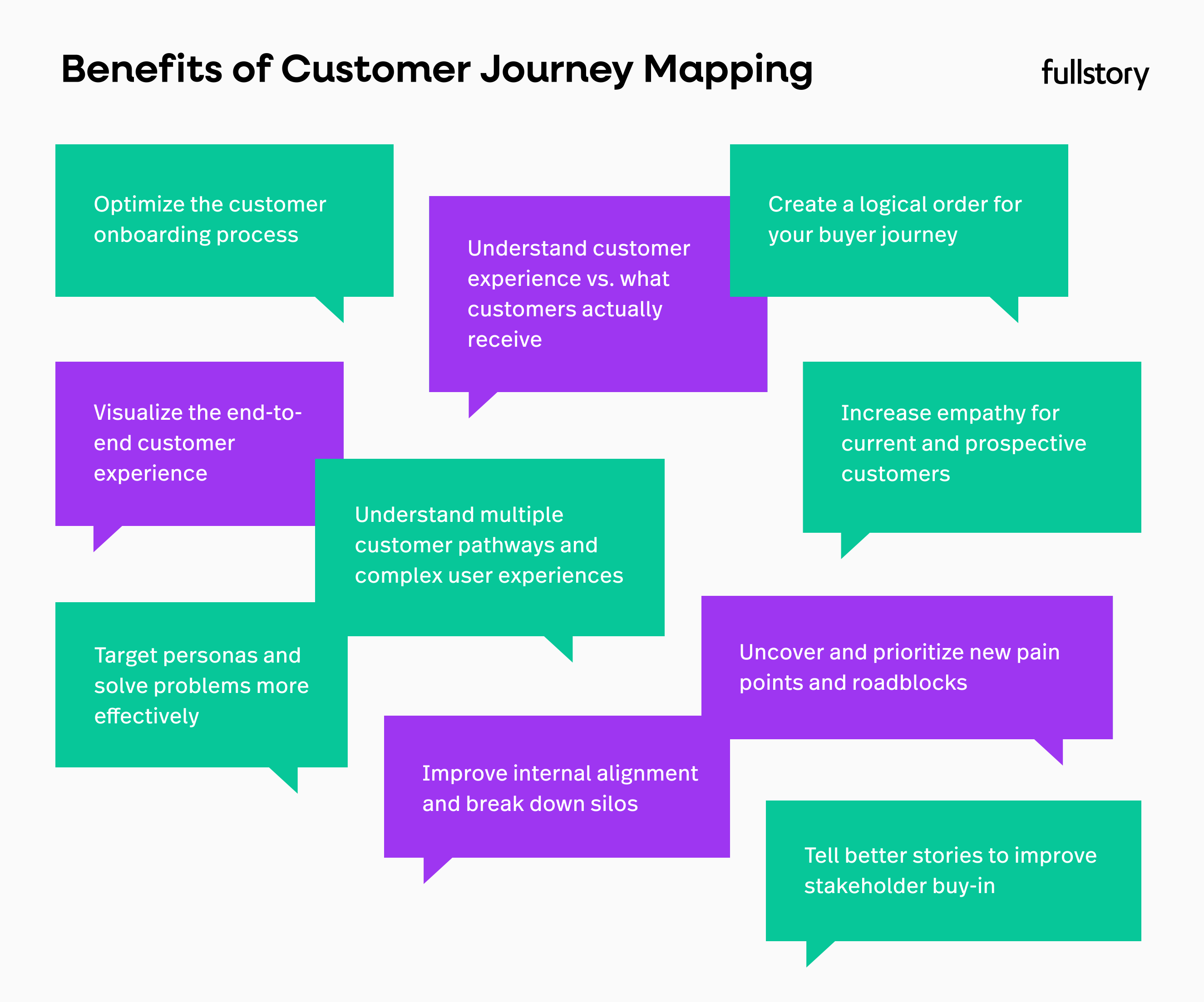
These insights highlight the importance of understanding user needs and preferences. By applying these lessons, businesses can create more effective strategies and enhance the overall user experience.
Credit: www.fullstory.com
Future Trends
Understanding the future trends in user journey mapping is crucial. It shapes how businesses interact with users. Emerging technologies and predicted changes play a significant role. They impact the user experience and journey.
Emerging Technologies
Several emerging technologies will reshape user journey mapping. These innovations offer new ways to understand and engage users.
- Artificial Intelligence (AI): AI can analyze user behavior. It provides insights into preferences and patterns.
- Machine Learning (ML): ML algorithms predict user actions. They help in creating personalized experiences.
- Virtual Reality (VR) and Augmented Reality (AR): VR and AR offer immersive user experiences. They transform how users interact with digital content.
Predicted Changes
Experts predict several changes in user journey mapping. These changes aim to improve user satisfaction and engagement.
- Increased Personalization: Users expect tailored experiences. Businesses will use data to meet these expectations.
- Seamless Omnichannel Experience: Users interact through multiple channels. A seamless experience across all channels will be essential.
- Real-Time Analytics: Real-time data helps in understanding user behavior. It allows businesses to make quick adjustments.
- Voice Search Optimization: More users use voice search. Optimizing for voice search will become crucial.
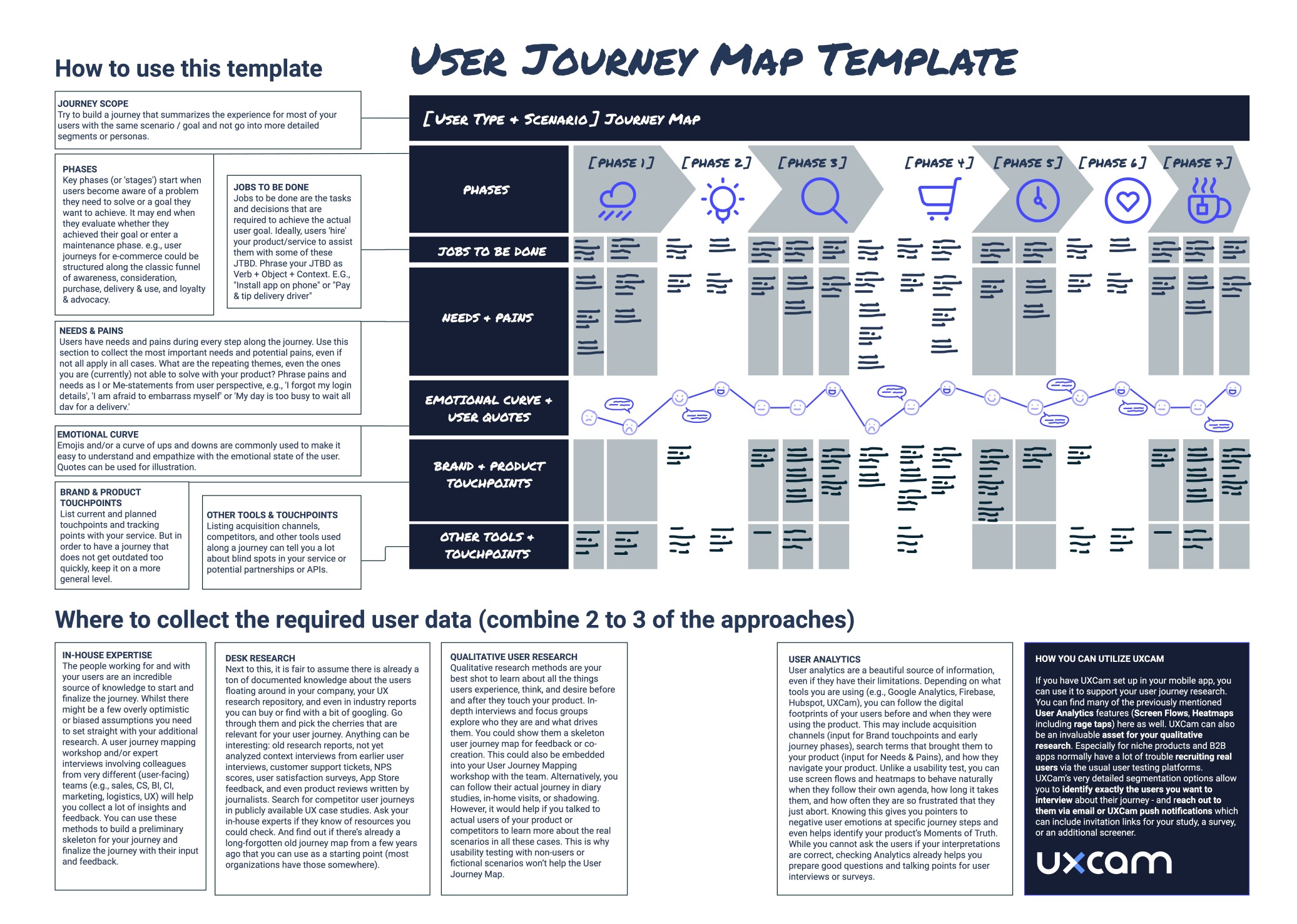
Adopting these future trends will enhance user journey mapping. It ensures businesses stay ahead in providing excellent user experiences.
Credit: uxcam.com
Frequently Asked Questions
What Is A User Journey?
A user journey is the path a user takes on a website. It involves steps from initial interaction to final conversion.
Why Is Understanding User Journey Important?
Understanding user journey helps improve user experience. It identifies pain points and optimizes the website for better engagement and conversions.
How Can You Map A User Journey?
You can map a user journey by analyzing user behavior. Use tools like Google Analytics to track interactions and identify patterns.
What Are The Stages Of A User Journey?
The stages of a user journey include awareness, consideration, decision, and retention. Each stage involves different user interactions and goals.
Conclusion
Understanding the user journey is crucial for your business success. It helps you see how users interact with your brand. Use this insight to improve customer experiences. Simple changes can make a big difference. Focus on user needs at each stage.
This builds trust and loyalty. Analyze data regularly to stay updated. Keep testing and refining your strategies. Happy users mean a thriving business. Start mapping your user journey today!