

A/B testing helps non-profits improve their strategies. It shows what works best.
For non-profits, finding the right tools can be tough. Resources are often limited. Yet, improving website performance and donor engagement is crucial. A/B testing can offer valuable insights without a huge budget. With the right tools, you can test different elements of your campaigns.
This helps you understand what your audience likes. Whether you are tweaking email subject lines or landing page layouts, A/B testing can guide you. Knowing where to invest your efforts can make a big difference. In this post, we will explore some of the best A/B testing tools suited for non-profits. Discover how these tools can help you optimize your outreach and maximize your impact.
Credit: posthog.com
Introduction To A/b Testing
A/B testing is a powerful tool for non-profits. It helps you make data-driven decisions. This can lead to improved engagement and donations.
What Is A/b Testing?
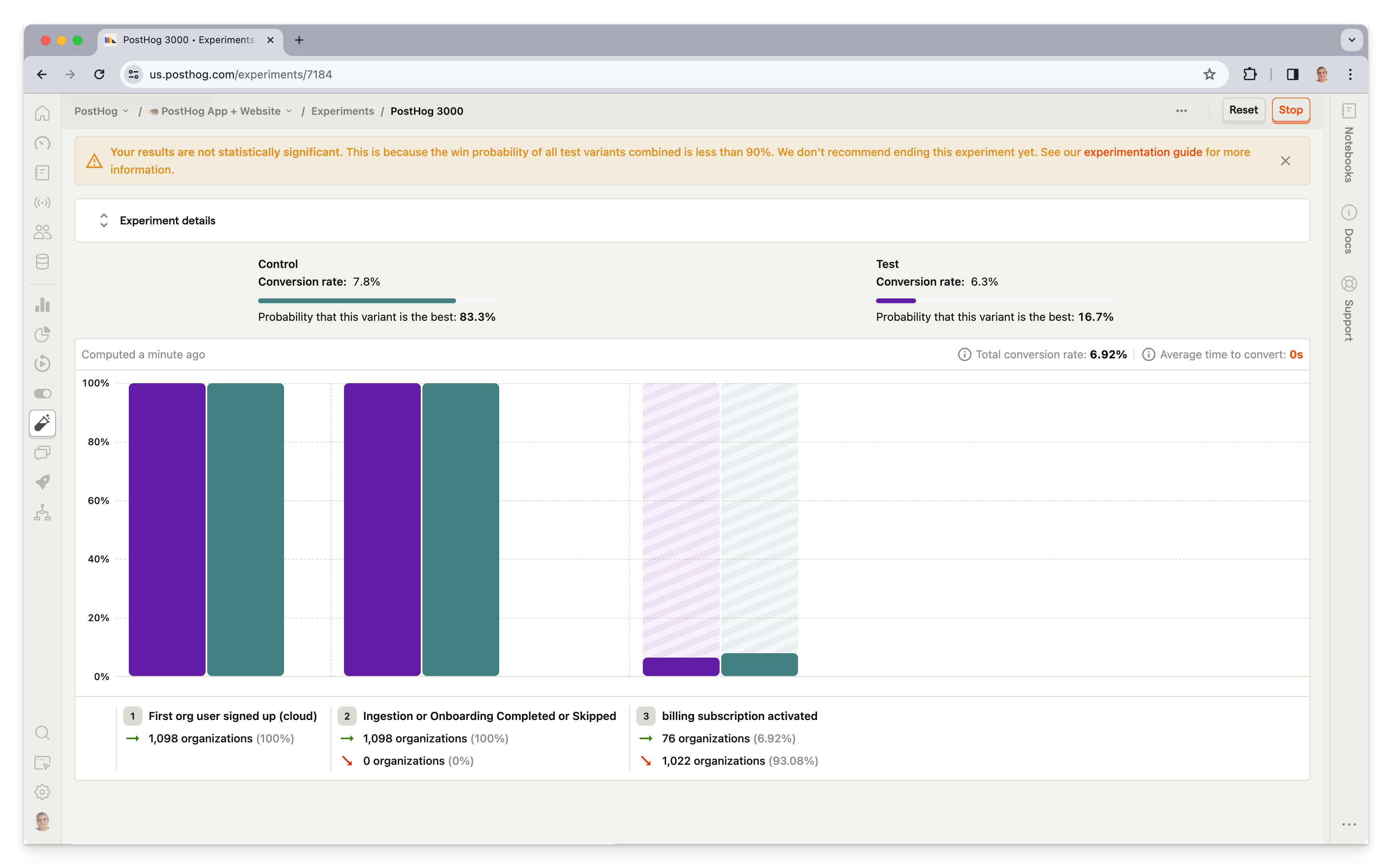
A/B testing, also known as split testing, involves comparing two versions of a web page or app. You show version A to one group and version B to another. Then, you see which performs better. This helps you understand what works best for your audience.
For example, you might test two different headlines. One group sees “Support Our Cause Today” and another sees “Help Us Make a Difference.” The version that gets more clicks or donations is the winner.
Importance For Non-profits
Non-profits often operate with limited resources. Every decision needs to count. A/B testing helps ensure you are using your resources effectively.
Here are some reasons why A/B testing is important for non-profits:
- Increases Donations: By testing different donation pages, you can find out which one encourages more people to give.
- Boosts Engagement: Test different email subject lines to see which ones get opened more.
- Improves Communication: Find out what messages resonate most with your audience.
- Enhances User Experience: Test different layouts to see which one users find easier to navigate.
Even small changes can make a big impact. For example, changing the color of a donation button can lead to more clicks.
Here is a simple table to show some elements you can test:
| Element | Possible Variations |
|---|---|
| Headline | Different wording |
| Call to Action | Button text, color, size |
| Images | Different photos or graphics |
| Layout | Different arrangements of text and images |
By using A/B testing, non-profits can make informed decisions. This leads to better results without guessing. Start small and test one element at a time. Over time, you will see what works best for your audience.
Credit: www.bluestate.co
Benefits Of A/b Testing For Non-profits
A/B testing, also known as split testing, is a method that compares two versions of a webpage or app against each other to determine which one performs better. For non-profits, this strategy can be a game-changer. By implementing A/B testing, non-profits can optimize their websites and marketing efforts to achieve better results without extra cost.
Increasing Donations
One major benefit of A/B testing for non-profits is the potential to increase donations. By testing different versions of donation pages, you can identify the elements that encourage more people to donate. This could involve experimenting with:
- Different headlines
- Images or videos
- Button colors and text
- Form fields
A simple change, like a more engaging headline, can make a significant difference in donation rates. For example, testing two different calls-to-action (CTAs) can reveal which one resonates more with your audience, leading to higher conversion rates.
Improving Engagement
A/B testing also helps in improving engagement with your audience. Non-profits often rely on email campaigns, social media posts, and website content to engage supporters. By testing different versions of these elements, you can find what works best for your audience. Consider testing:
- Email subject lines
- Content length and format
- Visual elements
- Post timings
For example, you could test two different email subject lines to see which one has a higher open rate. Or, you could compare two social media posts with different images to determine which one gets more likes and shares.
Here is a simple table to summarize the benefits:
| Benefit | Examples |
|---|---|
| Increasing Donations | Headlines, images, button text |
| Improving Engagement | Email subject lines, content format, post timings |
By continuously testing and optimizing, non-profits can maximize their impact and better fulfill their missions.
Key Features To Look For
Choosing the right A/B testing tools can help non-profits optimize their campaigns. It’s essential to know the key features these tools should offer. This ensures they align with your organization’s goals and provide the best results.
User-friendly Interface
A simple interface is crucial for non-profits. Many team members may not have technical backgrounds. The tool should be intuitive and easy to navigate. This minimizes the learning curve and allows quick setup and execution of tests.
- Clear dashboard
- Drag-and-drop functionality
- Accessible support documentation
Customization Options
Non-profits have unique needs. Customization options allow you to tailor the tests to your specific objectives. The tool should offer flexibility in experiment design and reporting.
| Customization Feature | Importance |
|---|---|
| Custom Variables | High |
| Segmented Reports | Medium |
| Personalized User Experience | High |
Look for tools that offer these features. They ensure your campaigns are effective and meet your specific needs.

Credit: www.wholewhale.com
Top A/b Testing Tools
Choosing the right A/B testing tool can make a big difference for non-profits. These tools help you understand what works best for your audience. By testing different versions of your website or email campaigns, you can improve engagement and donations. Below, we explore the top A/B testing tools for non-profits.
Tool 1: Features And Benefits
Tool 1 is a popular choice among non-profits due to its easy-to-use interface and robust features.
- Ease of Use: The drag-and-drop editor makes creating tests simple.
- Real-Time Results: Get immediate insights into which version performs better.
- Customizable Reports: Tailor reports to show the metrics that matter most to your organization.
- Integration: Seamlessly integrates with popular platforms like WordPress, MailChimp, and Google Analytics.
This tool offers a free version, making it accessible for non-profits with limited budgets. The paid plans provide advanced features like multivariate testing and personalized recommendations.
Tool 2: Features And Benefits
Tool 2 is another excellent option, known for its robust analytics and user-friendly design.
- Advanced Analytics: Offers detailed insights into user behavior and test performance.
- Visual Editor: Allows you to create tests without any coding knowledge.
- Segmentation: Target specific audience segments to see what works best for different groups.
- Support: Provides excellent customer support and a comprehensive knowledge base.
This tool offers a 30-day free trial, giving you ample time to test its features. The paid plans are scalable, making it suitable for non-profits of all sizes.
Setting Up Your First Test
Setting up your first A/B test can seem daunting. But, with the right tools and steps, it becomes manageable. This section will guide you through the process of setting up your first test. From choosing variables to creating variants, we cover it all.
Choosing Variables
Start by identifying what you want to test. Variables can be anything on your website or email campaign. This includes:
- Headlines
- Call-to-Action buttons
- Images
- Colors
- Layout
Choose one variable at a time. This helps to understand the impact clearly. For example, if testing headlines, keep all other elements constant. This ensures accurate results.
Creating Variants
Next, create different versions of the chosen variable. These are called variants. Aim for at least two variants: Version A (control) and Version B (test).
| Variant | Description |
|---|---|
| Version A | Original version of the element. |
| Version B | Modified version of the element. |
Ensure the changes are significant enough to measure. Small tweaks might not show clear results. For example, if testing a Call-to-Action button, change both its text and color.
Once your variants are ready, use your A/B testing tool to set up the test. Most tools provide step-by-step instructions. Follow these instructions carefully.
Remember to run the test long enough to gather meaningful data. This usually means at least a week, depending on your traffic.
Analyzing Test Results
Understanding your A/B test results is crucial. It helps you make informed decisions. Non-profits can greatly benefit from this data. Analyzing results may seem complex, but it’s manageable. Focus on key metrics and interpreting data correctly.
Metrics To Track
Tracking the right metrics is essential. Here are some key metrics to monitor:
- Conversion Rate: Percentage of visitors who completed a desired action.
- Click-Through Rate (CTR): Percentage of visitors who clicked on a link or button.
- Bounce Rate: Percentage of visitors who left the site quickly.
- Engagement Rate: Measures how much visitors interact with your content.
Interpreting Data
Interpreting data helps you understand the impact of your test. Here are steps to follow:
- Compare Metrics: Look at the metrics before and after the test.
- Identify Patterns: Look for trends in the data.
- Check Statistical Significance: Ensure your results are not due to chance.
- Make Data-Driven Decisions: Use the data to inform your next steps.
For example, consider the following table to compare metrics:
| Metrics | Variant A | Variant B |
|---|---|---|
| Conversion Rate | 5% | 7% |
| Click-Through Rate (CTR) | 10% | 12% |
| Bounce Rate | 30% | 25% |
| Engagement Rate | 3 mins | 4 mins |
This table shows that Variant B performs better. It has higher conversion and engagement rates. Such insights guide your strategies and improve your outreach efforts.
Common Mistakes To Avoid
A/B testing tools help non-profits make data-driven decisions. Yet, many make common mistakes that can skew results. Avoid these pitfalls to make the most of your tests.
Ignoring Sample Size
Sample size matters. A small sample can lead to unreliable results. Always ensure you test with enough users to get accurate data.
| Sample Size | Reliability |
|---|---|
| Small | Low |
| Medium | Moderate |
| Large | High |
A good rule of thumb is to use a minimum of 1000 users. This ensures the data is reliable and actionable. Always calculate the sample size before starting a test.
Overlooking User Experience
User experience is crucial. A/B tests should not disrupt the user journey. Ensure that the test variations offer a seamless experience.
- Test minor changes.
- Keep the user journey smooth.
- Avoid drastic design shifts.
A poor user experience can lead to higher bounce rates. This skews your test results. Always prioritize the user experience in your A/B tests.
Case Studies Of Successful A/b Tests
A/B testing can greatly benefit non-profits. It helps them understand what works best. Below are two case studies showing successful A/B tests. These examples highlight strategies and outcomes that helped these organizations grow.
Case Study 1: Strategy And Outcome
Objective: Increase email sign-ups for their newsletter.
Strategy: The foundation tested two different email sign-up forms. One form had a simple design with minimal text. The other form included more details about the benefits of subscribing.
| Version | Features | Conversion Rate |
|---|---|---|
| A | Simple design, minimal text | 4% |
| B | Detailed benefits, more text | 6% |
Outcome: The detailed form (Version B) increased email sign-ups by 50%. This strategy proved that providing more information can engage users better.
Case Study 2: Strategy And Outcome
Objective: Boost donations through their website.
Strategy: The initiative tested two different donation page layouts. One page had a single large donation button. The other page had multiple donation options with suggested amounts.
| Version | Features | Conversion Rate |
|---|---|---|
| A | Single large button | 3% |
| B | Multiple options, suggested amounts | 5% |
Outcome: The page with multiple options (Version B) increased donations by 67%. This strategy showed that giving donors more choices can lead to higher contributions.
Tips For Continuous Improvement
Non-profits can benefit greatly from using A/B testing tools. They help in making data-driven decisions. To maximize the benefits, continuous improvement is key. Below are tips that can help non-profits improve their strategies effectively.
Regular Testing
Regular testing ensures that you keep up with changing user behavior. It helps in identifying what works best for your audience. Here are a few tips for regular testing:
- Set a regular schedule for your tests.
- Track your results consistently.
- Use the data to refine your strategies.
Regular testing allows you to gather enough data. This data helps in making informed decisions. It also reduces the risk of relying on outdated practices. Your strategies remain relevant and effective.
Adapting To Trends
Adapting to trends is crucial. User preferences change over time. Keeping up with these changes is essential for success. Here are some tips for adapting to trends:
- Monitor industry trends regularly.
- Analyze competitor strategies.
- Incorporate relevant trends into your tests.
Staying updated with trends ensures your content remains engaging. It also helps in attracting new supporters. Make sure to balance trend adaptation with your core mission. This way, you stay true to your values while staying relevant.
Frequently Asked Questions
What Is A/b Testing For Non-profits?
A/B testing for non-profits involves comparing two versions of a webpage or campaign to see which performs better. This helps optimize donor engagement and increase conversions, ensuring resources are used efficiently.
Why Is A/b Testing Important For Non-profits?
A/B testing is important because it helps non-profits understand what strategies resonate with donors. By optimizing content and campaigns, organizations can improve donor engagement and increase conversions, ensuring better use of resources.
How Do Non-profits Benefit From A/b Testing Tools?
A/B testing tools help non-profits make data-driven decisions. They can identify what works best for donor engagement. This leads to improved donation rates and more effective campaigns.
Which A/b Testing Tools Are Best For Non-profits?
Some of the best A/B testing tools for non-profits include Google Optimize, Optimizely, and VWO. These tools offer features tailored to non-profits, helping them optimize their campaigns and webpages for better donor engagement.
Conclusion
A/B testing tools empower non-profits to make data-driven decisions. These tools help optimize campaigns, improve engagement, and increase donations. They are user-friendly and budget-friendly. With the right tool, non-profits can test different strategies effectively. This leads to better results and a stronger impact.
Start small, learn, and grow with A/B testing. It’s a valuable investment for any non-profit. Embrace these tools and see positive changes. Your mission deserves it.