

A/B testing tools are essential for optimizing website performance. They help businesses make data-driven decisions.
In today’s competitive digital landscape, making informed choices can set you apart. A/B testing tools provide a straightforward way to compare two versions of a webpage or app. They help you understand which version performs better based on user behavior.
This process involves splitting your audience into groups and showing them different variations. By analyzing the results, you can determine which option leads to more conversions or engagement. These tools offer features like easy setup, real-time analytics, and user-friendly interfaces. Understanding the features of A/B testing tools can help you choose the right one for your needs and improve your website’s success.
Introduction To A/b Testing
A/B testing is a vital tool for optimizing digital experiences. It helps businesses make data-driven decisions. This method compares two versions of a webpage or app to see which one performs better. Let’s dive deeper into what A/B testing is and its importance.
What Is A/b Testing?
A/B testing involves creating two versions of a page. Version A is the control, and version B is the variation. Users are randomly shown either version. Their actions are tracked to determine which version is more effective.
Here are the steps involved in A/B testing:
- Identify a goal, like increasing clicks or sign-ups.
- Create two versions of the page.
- Show each version to a random half of the audience.
- Analyze results to see which version meets the goal better.
Importance Of A/b Testing
A/B testing offers many benefits. Below are some key reasons why it is important:
- Improves user experience: By comparing two versions, you can see what users prefer.
- Increases conversion rates: Find out which elements drive more actions.
- Data-driven decisions: Take the guesswork out of design changes.
- Cost-effective: Optimize existing traffic instead of spending more on ads.
With A/B testing, you can make informed decisions. This leads to a more effective website or app. It helps in achieving business goals efficiently.
Key Features Of A/b Testing Tools
A/B testing tools are essential for optimizing website performance. They help in comparing different versions of a webpage to see which one performs better. These tools offer various features that make the testing process smooth and efficient.
User-friendly Interface
A key feature of A/B testing tools is a user-friendly interface. An easy-to-navigate interface allows users to set up tests quickly. Drag-and-drop options simplify the process. Intuitive dashboards display results clearly, making it easy to analyze data. Even those with minimal technical skills can use these tools effectively.
Advanced Targeting Options
Another important feature is advanced targeting options. These options allow you to target specific audience segments. You can create tests based on user behavior, location, or device type. This ensures that you reach the right audience with the right content. Detailed targeting improves the accuracy of your test results.
| Feature | Description |
|---|---|
| User-Friendly Interface | Easy to navigate and set up tests |
| Advanced Targeting Options | Target specific audience segments |
Integration Capabilities
Effective A/B testing tools rely heavily on their integration capabilities. Integrations allow these tools to work seamlessly with other platforms and software. This ensures a smooth data flow and accurate insights. Below, we explore some key integration features.
Crm Integration
Connecting your A/B testing tool with a Customer Relationship Management (CRM) system offers many benefits. It allows for more personalized testing and targeted experiments. Here are some key points:
- Enhanced Data Synchronization: Sync user data in real-time for accurate results.
- Personalized Testing: Use CRM data to segment your audience better.
- Improved Customer Insights: Gain deeper understanding of user behavior.
- Automation: Automate follow-ups and customer journeys based on test outcomes.
| Feature | Benefit |
|---|---|
| Data Sync | Real-time data updates |
| Segmentation | Better audience targeting |
| Insights | Understand user actions |
| Automation | Streamlined processes |
Analytics Tools
Integrating analytics tools with your A/B testing platform is crucial. It enhances your ability to analyze and interpret test results. Consider these advantages:
- Comprehensive Data Analysis: Combine data from various sources for a fuller picture.
- Actionable Insights: Make informed decisions based on detailed analytics.
- Performance Tracking: Monitor the impact of your tests on key metrics.
- Visualization: Use charts and graphs to simplify data interpretation.
- Google Analytics: Track user interactions and conversion rates.
- Adobe Analytics: Get advanced segmentation and reporting capabilities.
- Mixpanel: Monitor user behavior and event tracking.
- Kissmetrics: Understand user journeys and retention metrics.
Integrating with these tools ensures your A/B tests are data-driven and effective. You get a clearer view of user behavior and test performance.
Real-time Reporting
Real-time reporting is crucial for successful A/B testing. It lets you track and analyze data as it comes in. This helps you make quick decisions and optimize your campaigns. Real-time reporting provides immediate feedback, which is essential for fast-paced digital marketing.
Data Visualization
Data visualization is a key feature of A/B testing tools. It allows you to see your data in a graphical format. This makes it easier to understand and interpret. Charts, graphs, and heatmaps are common visualization tools. They help highlight trends and patterns in your data. Visual data is more accessible and less overwhelming than raw numbers.
Customizable Reports
Customizable reports let you tailor the data to your needs. You can choose what metrics to include and how to display them. This flexibility helps you focus on what matters most to your business. Custom reports can be saved and shared easily. This makes it simple to communicate results with your team.
| Feature | Description |
|---|---|
| Real-Time Reporting | Provides immediate feedback for quick decision-making. |
| Data Visualization | Uses charts, graphs, and heatmaps to make data easy to understand. |
| Customizable Reports | Allows tailoring of data to meet specific business needs. |
Segmentation And Personalization
Segmentation and personalization are crucial features of A/B testing tools. They help tailor experiences to specific user groups. This ensures that each user gets the most relevant content. Let’s explore how audience segmentation and personalized experiences work.
Audience Segmentation
Audience segmentation divides your visitors into different groups. Each group shares common characteristics. This can include:
- Demographics (age, gender, location)
- Behavior (browsing history, purchase history)
- Psychographics (interests, values)
By segmenting your audience, you can test different variations for each group. This helps you understand what works best for each segment. For example, younger users might prefer a different design than older users. Segmentation allows you to cater to these preferences.
Personalized Experiences
Personalized experiences mean showing different content to different users. This is based on their segment. Personalized experiences can include:
- Customized messages
- Personalized product recommendations
- Tailored promotions
For instance, new visitors might see an introductory offer. Returning customers might see loyalty rewards. Personalization increases engagement and conversion rates. Users feel valued when they see relevant content.
Using A/B testing tools for segmentation and personalization helps optimize your site. It ensures each user has the best possible experience.
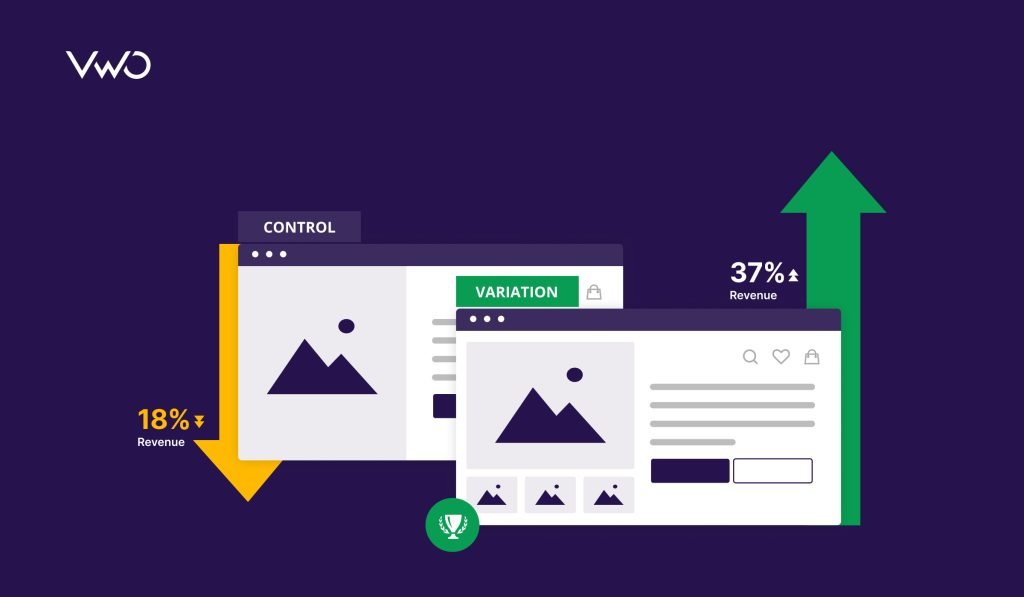
Credit: vwo.com
Multivariate Testing
Multivariate testing (MVT) is a powerful method in A/B testing tools. It allows you to test multiple variables simultaneously. This means you can see which combination of elements works best on your website. The goal is to understand how different elements interact and affect user behavior.
Difference From A/b Testing
A/B testing compares two versions of a single variable. For example, comparing two headlines. Multivariate testing, on the other hand, tests multiple variables at once. This gives a deeper insight into how different elements interact.
| Feature | A/B Testing | Multivariate Testing |
|---|---|---|
| Number of Variables | One | Multiple |
| Purpose | Simple comparisons | Complex interactions |
| Time | Shorter | Longer |
| Complexity | Simple | Complex |
Benefits Of Multivariate Testing
Multivariate testing offers several key benefits. First, it provides a deeper understanding of user behavior. By testing multiple elements, you can see which combination works best. This can lead to more effective changes on your site.
Second, it saves time. Instead of running multiple A/B tests, you can test everything at once. This means you get results faster.
Lastly, multivariate testing can improve your website’s performance. By understanding which combinations work best, you can make more informed decisions. This can lead to increased conversions and user satisfaction.
- Deeper Insights: Understand how elements interact.
- Time-Saving: Test multiple elements at once.
- Better Performance: Make informed decisions for better results.
Automated Insights
Automated insights are crucial for modern A/B testing tools. They help users make quick decisions based on data. These insights save time and reduce manual analysis. Let’s explore two key features: AI-powered suggestions and optimization tips.
Ai-powered Suggestions
AI-powered suggestions analyze test results and provide actionable insights. They use machine learning to identify patterns in user behavior. This ensures more accurate predictions. Here are some benefits:
- Quick Analysis: AI processes data faster than humans.
- Accurate Predictions: Machine learning improves result accuracy.
- Reduced Bias: AI eliminates human bias in data interpretation.
Optimization Tips
Optimization tips are essential for improving test outcomes. These tips guide users on how to enhance their website or app. They focus on key areas for improvement. Here are some common optimization tips:
- Content Layout: Suggests changes in content arrangement.
- Call-to-Action (CTA): Recommends better CTA placement and design.
- Loading Speed: Advises on improving page load times.
These tips help users achieve better conversion rates. They ensure your A/B tests lead to tangible improvements. Automated insights make this process more efficient.

Credit: www.glassbox.com
Case Studies And Success Stories
A/B testing tools can transform your business. They provide data-driven insights. This helps optimize your website and marketing strategies. Let’s explore some success stories. These will show how A/B testing tools work in real-life scenarios.
E-commerce Success
E-commerce companies often rely on A/B testing tools. These tools help increase conversions and sales. Here are some key examples:
| Company | Tested Element | Result |
|---|---|---|
| Company A | Call-to-Action Button | 15% Increase in Clicks |
| Company B | Product Page Layout | 20% Increase in Sales |
Company A tested different call-to-action buttons. They found a 15% increase in clicks. Small changes in button design can make a big difference.
Company B experimented with product page layouts. This led to a 20% increase in sales. A/B testing tools helped them find the most effective layout.
B2b Applications
B2B companies also benefit from A/B testing tools. They use these tools to improve lead generation and customer engagement. Here are some examples:
- Company C: Tested email subject lines, achieving a 10% increase in open rates.
- Company D: Experimented with landing page forms, resulting in a 25% boost in lead submissions.
Company C focused on email subject lines. A 10% increase in open rates was achieved. This shows the impact of effective email marketing.
Company D worked on landing page forms. They saw a 25% boost in lead submissions. A/B testing tools helped them optimize their forms for better results.
These case studies highlight the importance of A/B testing tools. They provide valuable insights. This helps improve various aspects of your business.
Choosing The Right Tool
Finding the perfect A/B testing tool can be challenging. With many options available, making an informed decision is crucial. Let’s delve into some key aspects to consider.
Budget Considerations
First, determine your budget. Tools vary widely in price. Some offer free trials or basic plans. Others require a significant investment. Evaluate your financial constraints. Ensure the tool provides value for money.
| Tool | Free Plan | Basic Plan | Advanced Plan |
|---|---|---|---|
| Tool A | Yes | $49/month | $199/month |
| Tool B | No | $99/month | $299/month |
| Tool C | Yes | $29/month | $149/month |
Feature Comparison
Next, compare features. Different tools offer different capabilities. Some focus on ease of use. Others provide advanced analytics. Identify your needs. Match them with the tool’s features.
- Ease of Use: A user-friendly interface is crucial for beginners.
- Integration: Check if it integrates with your current systems.
- Analytics: Look for detailed reporting and data visualization.
- Support: Ensure the tool offers good customer support.
Consider the following feature comparison:
| Feature | Tool A | Tool B | Tool C |
|---|---|---|---|
| Ease of Use | High | Medium | High |
| Integration | Medium | High | Medium |
| Analytics | High | High | Medium |
| Support | 24/7 | Business Hours | 24/7 |
Choosing the right tool involves careful consideration. Balance your budget with the features you need. This ensures you get the best value and results.
Credit: www.convert.com
Frequently Asked Questions
What Is A/b Testing?
A/B testing compares two versions of a webpage to see which performs better. It’s used to optimize user experience.
Why Use A/b Testing Tools?
A/B testing tools help automate experiments and analyze results. They save time and ensure accuracy.
How Do A/b Testing Tools Work?
A/B testing tools split traffic between two versions. They collect data on user interactions and compare performance.
What Features To Look For In A/b Testing Tools?
Look for features like easy setup, detailed analytics, and integration capabilities. These improve efficiency and results.
Conclusion
A/B testing tools offer many benefits for businesses. They help optimize website performance. They provide data-driven insights. These insights guide better decision-making. They improve user experience and increase conversions. Testing tools are user-friendly and efficient. They save time and resources.
Using these tools can enhance your marketing strategy. They are essential for growth and success. Choose the right tool for your needs. Start testing and see the difference.