

Online Survey Tools are essential for collecting feedback and data. They help businesses understand customer needs and preferences.
In today’s digital world, gathering feedback is crucial. Online survey tools make this process easy and efficient. They provide businesses with valuable insights through simple and effective means. Whether you are a small business owner or part of a large corporation, these tools can help you make informed decisions.
The right survey tool can boost customer satisfaction and improve your services. With many options available, choosing the best one can be challenging. This blog will guide you through the features and benefits of top online survey tools. By the end, you will have a clear understanding of how these tools can benefit your business. Let’s dive in!
Introduction To Online Survey Tools
Online survey tools have become essential for collecting data quickly and efficiently. These tools help businesses understand their customers’ needs, preferences, and feedback. By using online survey tools, companies can make better decisions and improve their products or services.
What Are Online Survey Tools?
Online survey tools are digital platforms designed to create, distribute, and analyze surveys. They enable users to gather information from a target audience through the internet. Examples of popular online survey tools include:
- SurveyMonkey
- Google Forms
- Typeform
- Qualtrics
These tools offer various features such as customizable templates, multiple question types, and real-time data analysis. They are user-friendly and require no technical expertise.
Importance For Businesses
Online survey tools are crucial for businesses due to several reasons:
- Cost-effective: Online surveys are more affordable than traditional methods. They reduce the need for paper, printing, and postage.
- Time-saving: These tools allow quick creation and distribution of surveys. Responses are gathered in real-time, enabling faster decision-making.
- Wide reach: Online surveys can reach a global audience. This helps businesses gather diverse opinions and insights.
- Data accuracy: Automated data collection reduces human error. It ensures more accurate and reliable results.
- Easy analysis: Most tools offer built-in analytics. This makes it easy to analyze data and generate reports.
Overall, online survey tools help businesses stay competitive and customer-focused. They provide valuable insights that drive growth and innovation.
Key Features To Look For
Choosing the right online survey tool can be challenging. There are many options available, each with unique features. Knowing what to look for can help you make the best choice. Here are some key features to consider.
User-friendly Interface
A user-friendly interface is essential. It ensures ease of use for both creators and respondents. Look for simple navigation and clear instructions. A good interface saves time and reduces errors.
Consider a tool with a clean layout. This helps users focus on the survey content. Drag-and-drop functionality can also enhance the experience. It allows for quick and easy customization.
Customizable Templates
Customizable templates make survey creation faster. Pre-designed templates provide a starting point. They can be tailored to fit specific needs. This flexibility is crucial for various survey types.
Look for a variety of templates. Options should include customer feedback, employee satisfaction, and market research. The ability to modify these templates adds value.
Here is a table summarizing the key features:
| Feature | Importance |
|---|---|
| User-Friendly Interface | Ensures ease of use |
| Customizable Templates | Speeds up survey creation |
These features ensure the tool is effective and efficient. Choose wisely to get the most out of your online surveys.
Popular Online Survey Tools
Popular online survey tools make data collection easy and efficient. These tools help gather feedback, opinions, and insights quickly. Below, we explore some of the most popular online survey tools available today.
Surveymonkey
SurveyMonkey is a widely used survey tool. It’s popular for its user-friendly interface and robust features. Here’s a closer look at its features:
- Easy to create surveys
- Customizable templates
- Advanced analytics
- Integration with other tools
SurveyMonkey offers a range of plans, from free to premium. The free plan includes basic features, while the premium plans provide advanced options. These include more detailed reporting and customizable surveys.
Google Forms
Google Forms is another popular choice. It’s free and simple to use. Many people prefer it for its seamless integration with other Google services. Key features of Google Forms include:
- Unlimited surveys and responses
- Customizable themes
- Real-time collaboration
- Data stored in Google Sheets
Google Forms is suitable for both personal and professional use. It allows users to create surveys with various question types. It also provides basic data analysis tools.

Credit: surveysparrow.com
Creating Effective Surveys
Online survey tools are valuable for gathering data. But creating effective surveys is key to getting useful insights. This section will guide you through some important tips and question types for designing effective surveys.
Design Tips
Good survey design ensures higher response rates and better data quality. Here are some essential design tips:
- Keep it simple: Use clear and concise language. Avoid jargon.
- Logical flow: Arrange questions in a logical order. Start with general questions.
- Limit length: Shorter surveys get more responses. Aim for 5-10 minutes.
- Consistent format: Use consistent fonts and spacing. This makes the survey easy to read.
- Test your survey: Conduct a pilot test. This helps identify issues before the main survey.
Question Types
Choosing the right question types is crucial for effective surveys. Here are some common question types:
| Question Type | Description | Example |
|---|---|---|
| Multiple Choice | Respondents select one or more options. | What is your favorite color? Red Blue Green |
| Rating Scale | Respondents rate an item on a scale. | Rate your satisfaction: 1 2 3 4 5 |
| Open-Ended | Respondents provide a free-text answer. | What do you like about our product? |
By following these design tips and using the appropriate question types, you can create more effective surveys. This will lead to better data collection and more actionable insights.
Analyzing Survey Data
Analyzing survey data is a crucial step in understanding the insights gathered. It helps transform raw data into meaningful information. This process involves various techniques and tools. The goal is to make informed decisions. Below are key aspects of analyzing survey data.
Data Visualization
Data visualization plays a vital role in survey analysis. It helps in presenting the data clearly. Charts, graphs, and tables are common visualization tools. Here are some popular types:
- Bar Charts: Ideal for comparing different groups.
- Pie Charts: Useful for showing proportions.
- Line Graphs: Great for showing trends over time.
Using these visuals makes it easier to spot patterns and outliers. The goal is to simplify complex data.
Interpreting Results
Interpreting results is about finding meaning in the data. This involves looking at the visualizations and drawing conclusions. Here are some steps to follow:
- Identify trends: Look for patterns in the data.
- Compare groups: See how different groups respond.
- Check for outliers: Spot any unusual data points.
This process helps in understanding the broader implications of the survey data. It provides insights that can drive decision-making.
Improving Response Rates
Online survey tools offer a great way to gather feedback. But improving response rates can be a challenge. Here are some effective strategies to ensure more participants complete your surveys.
Incentives
Offering incentives can boost participation. People love rewards. Consider these options:
- Discount coupons
- Gift cards
- Entry into a prize draw
Make sure the reward is relevant to your audience. A small investment can lead to valuable insights.
Follow-up Strategies
Follow-up strategies are crucial. Sometimes, people forget or miss the initial survey request. Here are some tips:
- Send reminder emails
- Use SMS notifications
- Engage via social media
Keep the follow-ups polite and spaced out. Don’t spam your audience. Consistent yet gentle reminders can lead to higher response rates.
Integrating Survey Tools With Other Platforms
Integrating online survey tools with other platforms can enhance data collection and usage. By connecting survey tools with various systems, you can streamline workflows, improve data accuracy, and gain deeper insights. This section will explore how to integrate survey tools with two key platforms: CRM Systems and Email Marketing.
Crm Systems
Integrating survey tools with CRM systems helps in capturing and storing customer feedback efficiently. It allows for real-time data synchronization between the survey tool and the CRM. This integration helps in maintaining a single source of truth for all customer data.
Here are some key benefits of integrating survey tools with CRM systems:
- Enhanced Customer Profiles: Add survey responses directly to customer profiles.
- Improved Segmentation: Use survey data to segment customers better.
- Automated Workflows: Trigger actions based on survey responses.
For example, if a customer gives negative feedback, the CRM can alert the support team immediately. Conversely, positive feedback can trigger an automated thank-you email.
Email Marketing
Integrating survey tools with email marketing platforms helps in reaching your audience effectively. You can send targeted surveys based on email campaigns. This integration allows for personalized follow-ups and better engagement.
Key benefits of integrating survey tools with email marketing platforms include:
- Targeted Surveys: Send surveys to specific email lists.
- Personalized Content: Customize surveys based on email campaign data.
- Improved Engagement: Follow up with respondents based on survey answers.
For instance, after a product launch email, you can send a survey to gather feedback. This helps in understanding customer satisfaction and making necessary improvements.
Below is a simple example of how survey data integration can be visualized:
| Survey Question | CRM Action | Email Marketing Action |
|---|---|---|
| How satisfied are you with our product? | Update customer satisfaction score in CRM | Send thank-you email or follow-up survey |
| Would you recommend our product? | Flag customer as a promoter or detractor | Send referral program details |
Integrating survey tools with CRM systems and email marketing platforms can significantly enhance your customer experience. It ensures that feedback is not just collected but also acted upon effectively.
Credit: www.zonkafeedback.com
Case Studies
Case studies are powerful tools that show real-world applications of online survey tools. They highlight the effectiveness and versatility of these tools in various business scenarios. Below, we explore two crucial aspects through specific examples: Successful Business Examples and Lessons Learned.
Successful Business Examples
Many businesses have achieved great results using online survey tools. These tools help gather valuable customer feedback, improve products, and make informed decisions. Here are a few examples:
| Company | Industry | Outcome |
|---|---|---|
| ABC Retail | Retail | Increased customer satisfaction by 20% |
| XYZ Tech | Technology | Enhanced product features based on feedback |
| 123 Hospitality | Hospitality | Improved service quality and guest experience |
Lessons Learned
From these case studies, several valuable lessons emerge. These lessons can help other businesses use online survey tools more effectively:
- Engage Your Audience: Use engaging questions to keep respondents interested.
- Analyze Data: Take time to analyze survey data for actionable insights.
- Act on Feedback: Implement changes based on feedback to show customers you value their opinions.
By following these lessons, businesses can maximize the benefits of online survey tools. They help in improving customer relations and driving growth.
Future Trends In Online Surveys
The landscape of online surveys is rapidly evolving. With technological advancements, we see new trends shaping the future. Let’s explore some key trends that are transforming online surveys.
Ai And Automation
Artificial Intelligence (AI) is revolutionizing online surveys. AI can analyze responses quickly and efficiently. This speeds up the data analysis process.
Automation is another game-changer. It helps in creating surveys faster. Automated tools can send personalized surveys to participants. They can also track responses in real-time.
| Feature | Benefit |
|---|---|
| AI Analysis | Quick data insights |
| Automated Surveys | Faster creation and distribution |
| Real-time Tracking | Immediate response monitoring |
Mobile Accessibility
Mobile accessibility is crucial. More people use smartphones for daily tasks. Surveys must be mobile-friendly. This increases participation rates.
Responsive design is key. Surveys should adjust to different screen sizes. This ensures a smooth user experience.
- Easy to navigate on small screens
- Quick loading times
- Simple and clear questions
Push notifications can also be useful. They remind users to complete surveys. This leads to higher response rates.
The future of online surveys looks promising. With AI and mobile accessibility, we can expect more efficient and user-friendly surveys.
Credit: www.voxco.com
Frequently Asked Questions
What Are Online Survey Tools?
Online survey tools are digital platforms used to create, distribute, and analyze surveys. They help collect data from respondents.
Why Use Online Survey Tools?
Online survey tools offer convenience, speed, and efficiency. They provide real-time data collection and analysis, saving time and effort.
How Do Online Survey Tools Work?
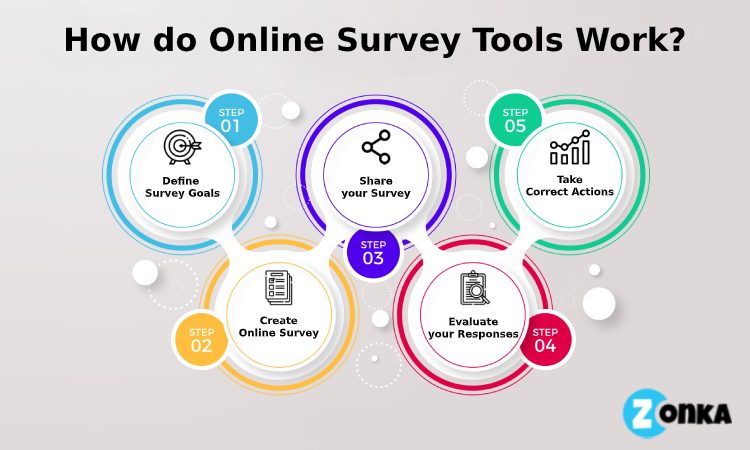
Online survey tools allow users to design surveys, distribute them via email or social media, and collect responses. They offer analytics features.
Are Online Survey Tools Secure?
Most online survey tools use encryption and secure servers. They ensure the privacy and confidentiality of respondents’ data.
Conclusion
Choosing the right online survey tool can boost your business insights. These tools offer user-friendly interfaces, making data collection easy. They help you understand customer needs better. Analyze feedback quickly and make informed decisions. Many options exist, so pick one that fits your requirements.
Start using an online survey tool today. Enhance your business strategies and grow. Happy surveying!