

Analytics and CRO tools play a crucial role in boosting website performance. They help businesses understand user behavior and improve conversion rates.
In today’s digital world, data is king. Every click, scroll, and interaction on your website tells a story. By using analytics with CRO tools, you can uncover these stories and make informed decisions. Analytics give you insights into what works and what doesn’t.
CRO tools help turn these insights into action. Together, they provide a powerful combination to optimize your website. This blog will explore how to effectively use analytics with CRO tools. You will learn how these tools can help you enhance user experience, increase conversions, and drive growth. Ready to dive in? Let’s get started!
Introduction To Cro Tools
In the digital world, understanding user behavior is key. Conversion Rate Optimization (CRO) tools help you improve your website’s performance. By using analytics with CRO tools, you can make data-driven decisions. This can increase conversions and enhance user experience.
What Is Cro?
Conversion Rate Optimization (CRO) is the process of improving your website to get more conversions. A conversion can be a sale, a sign-up, or any desired action. CRO involves understanding how users move through your site. It also focuses on what actions they take and what stops them from completing your goals.
Importance Of Cro Tools
CRO tools are essential for any business with an online presence. Here are some reasons why they are important:
- Data-Driven Decisions: CRO tools provide valuable data. This data helps you understand your users’ behavior.
- Improved User Experience: By using CRO tools, you can identify and fix user pain points.
- Increased ROI: Optimizing your website can lead to more conversions. This means a higher return on investment.
- Competitive Advantage: CRO tools help you stay ahead of the competition. They allow you to continuously improve your site.
| Feature | Description |
|---|---|
| A/B Testing | Compare two versions of a web page to see which performs better. |
| Heatmaps | Visualize where users click, move, and scroll on your site. |
| Session Recordings | Watch real user sessions to understand their behavior. |
Using analytics with CRO tools helps you make informed decisions. This can lead to better user experiences and higher conversion rates.
Role Of Analytics In Cro
Conversion Rate Optimization (CRO) relies heavily on data. Analytics provide insights into user behavior. This helps in making informed decisions. By understanding what works and what doesn’t, you can improve your website’s performance. Analytics tools offer the data you need to optimize your conversion rates effectively.
Data-driven Decisions
Using analytics for CRO allows you to make data-driven decisions. Instead of guessing, you have actual data to guide your choices. This reduces risks and increases the chances of success.
For instance, if data shows visitors leave your site at a specific point, you can investigate why. Then, you can make changes to improve user experience.
Key Metrics To Track
Tracking the right metrics is crucial. Here are some key metrics you should focus on:
- Conversion Rate: This tells you the percentage of visitors who complete a desired action.
- Bounce Rate: Indicates the percentage of visitors who leave after viewing only one page.
- Average Session Duration: Shows how long visitors stay on your site.
- Click-Through Rate (CTR): The ratio of users who click on a specific link to the number of total users who view it.
- Exit Rate: The percentage of people who leave your site from a specific page.
| Metric | Description |
|---|---|
| Conversion Rate | Percentage of visitors completing a desired action. |
| Bounce Rate | Percentage of visitors leaving after one page. |
| Average Session Duration | Time visitors spend on your site. |
| Click-Through Rate (CTR) | Ratio of users clicking a link to those viewing it. |
| Exit Rate | Percentage leaving from a specific page. |
Understanding these metrics helps you identify areas for improvement. You can then take action to optimize your site for better conversions.
Choosing The Right Analytics Tools
Choosing the right analytics tools is crucial for effective Conversion Rate Optimization (CRO). With the right tools, you can gain valuable insights into user behavior. This helps in making informed decisions to improve your website’s performance. Here, we will explore popular analytics platforms and the features you should consider.
Popular Analytics Platforms
Several analytics platforms can help you track and analyze your website’s data. Below are some popular choices:
- Google Analytics: Widely used and offers comprehensive features.
- Adobe Analytics: Ideal for businesses needing advanced features.
- Mixpanel: Focuses on user interactions and engagement.
- Hotjar: Provides heatmaps and session recordings.
Features To Consider
When choosing an analytics tool, consider the following features to ensure it meets your needs:
| Feature | Description |
|---|---|
| Ease of Use | Look for a user-friendly interface. |
| Real-Time Data | Ensure the tool provides real-time insights. |
| Custom Reports | Check if you can create tailored reports. |
| Integration | Verify it integrates with your existing tools. |
| Support | Consider the quality of customer support. |
Choosing the right analytics tool involves evaluating these features. This helps in making the best choice for your website’s needs.

Credit: www.cxperts.io
Integrating Analytics With Cro Tools
Integrating Analytics with CRO Tools is an essential step for optimizing your website’s performance. By combining analytics data with Conversion Rate Optimization (CRO) tools, you can gain deeper insights into user behavior. This helps you make informed decisions to improve your conversion rates. Let’s explore how to set up and configure these integrations, and the common challenges you might face.
Setup And Configuration
Setting up analytics with CRO tools requires a few steps. First, ensure you have the necessary tools in place. Common tools include Google Analytics and Hotjar. Next, create an account on your chosen CRO tool and link it with your analytics platform.
Here is a simple step-by-step process:
- Log in to your analytics account.
- Navigate to the admin section.
- Select the property you want to integrate with CRO tools.
- Find the integration option and choose your CRO tool.
- Follow the on-screen instructions to complete the setup.
After completing these steps, configure your dashboard to display relevant data. This can include metrics like session duration, bounce rate, and conversion paths.
Common Integration Challenges
Integrating analytics with CRO tools is not without challenges. Some common issues include:
- Data Discrepancies: Different tools may report different numbers. Ensure all tools use the same tracking parameters.
- Technical Issues: Compatibility problems between tools can arise. Check for updates and support documentation.
- User Permissions: Ensure all team members have the right access levels. This avoids data mismanagement.
Data discrepancies often occur due to different tracking methods. Always cross-check data from multiple sources to ensure accuracy.
Technical issues can be resolved by consulting the support documentation of the tools. If problems persist, consider reaching out to support teams.
User permissions are crucial for maintaining data integrity. Regularly review and update access levels for team members.
By addressing these challenges, you can ensure a smooth integration process. This will allow you to make data-driven decisions with confidence.
Analyzing User Behavior
Analyzing user behavior is crucial for optimizing your website. Understanding how users interact with your site can help you make data-driven decisions. With CRO tools, you can gain deep insights into user behavior. This allows you to improve the user experience and increase conversions. Below are some key methods to analyze user behavior.
Heatmaps And Session Recordings
Heatmaps show where users click, scroll, and hover on your site. This visual representation helps you identify popular areas. You can see which elements attract the most attention. This can guide you in placing important content and CTAs.
Session recordings allow you to watch real user interactions. You can see how users navigate through your site. Identify any obstacles they face. This can help you understand user pain points and improve the design.
User Flow Analysis
User flow analysis tracks the path users take through your site. This shows the common routes users follow. You can see where they drop off or convert. Use this data to streamline the user journey.
Create a table to organize key insights:
| Step | Action | Drop-off Rate |
|---|---|---|
| Landing Page | Visit | 20% |
| Product Page | View | 30% |
| Checkout | Purchase | 10% |
Analyze this table to find areas for improvement. For example, a high drop-off rate on the product page might indicate a problem. You can then test different solutions to reduce drop-offs.
.webp "Using Analytics With CRO Tools: Boost Your Conversion Rates 2")
Credit: www.vezadigital.com
A/b Testing And Analytics
Using analytics with CRO tools can significantly enhance your website’s performance. One of the most effective methods is A/B testing. It helps identify which changes lead to better results. Combining A/B testing with analytics provides deeper insights. This allows for more informed decisions.
Setting Up A/b Tests
Start by identifying what you want to test. This could be headlines, images, or call-to-action buttons. Create two versions: the original (A) and the variant (B). Use a CRO tool to split your audience. Half see version A, the other half see version B. Ensure the sample size is large enough for reliable results.
Interpreting Test Results
Once the test runs for a suitable period, analyze the data. Check metrics like conversion rate, bounce rate, and time on site. Use analytics tools to compare the performance of both versions. Look for statistically significant differences. This will help you determine the winning variant. Make data-driven decisions based on these insights.
| Metric | Version A | Version B |
|---|---|---|
| Conversion Rate | 5% | 7% |
| Bounce Rate | 50% | 45% |
| Time on Site | 1 min | 1.5 min |
With this data, you can see which version performs better. Make changes to your website based on these insights.
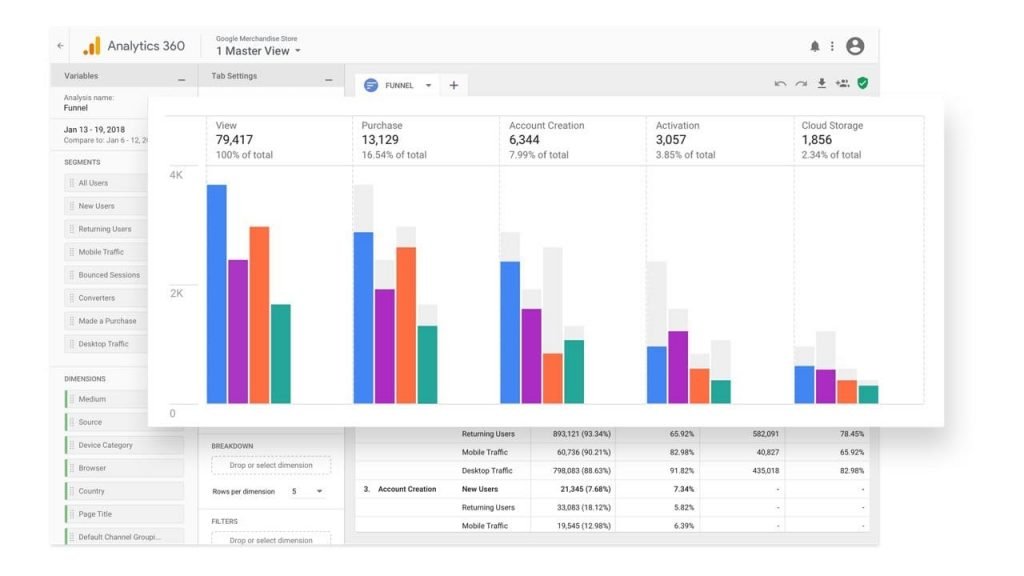
Optimizing Conversion Funnels
Using analytics with CRO tools can significantly enhance your conversion funnels. By understanding user behavior and identifying pain points, you can streamline the process. This ensures more visitors complete desired actions, such as purchasing a product or signing up for a newsletter. Let’s explore how to optimize conversion funnels effectively.
Identifying Drop-off Points
Identifying drop-off points is crucial in conversion rate optimization. Use analytics tools to track where users abandon the funnel. This could be on a product page, during checkout, or after adding items to the cart.
Here are steps to identify drop-off points:
- Set up funnel tracking in your analytics tool.
- Analyze each step of the funnel for drop-offs.
- Look for patterns or common issues causing abandonment.
For instance, use Google Analytics to track user journeys and pinpoint exact steps where they leave. This data helps you understand and address the reasons behind drop-offs.
Improving User Experience
Improving user experience is essential for higher conversions. A seamless and enjoyable experience keeps users engaged. Consider the following strategies:
- Ensure your website loads quickly.
- Make navigation intuitive and easy to use.
- Use clear and compelling calls-to-action (CTAs).
- Optimize forms to be short and simple.
For example, a slow-loading page can frustrate users, causing them to leave. Ensure your website is optimized for speed. Also, test different CTAs to see which ones perform best. Sometimes, a simple change in wording can make a big difference.
Additionally, consider using heatmaps to see where users click and scroll. This visual data provides insight into user behavior. You can then make informed decisions to enhance the user experience.
By identifying drop-off points and improving user experience, you can effectively optimize your conversion funnels. Use analytics with CRO tools to gain valuable insights and drive more conversions.
Case Studies
Case studies provide real-world examples of how businesses use analytics with CRO tools. They showcase successful implementations and the lessons learned from these experiences. This section highlights some noteworthy case studies.
Successful Cro Implementations
Many businesses have seen significant improvements by using analytics with CRO tools. Here are a few success stories:
- Company A: Increased conversion rates by 30% within three months. They used heatmaps to identify user behavior and optimize landing pages.
- Company B: Reduced cart abandonment by 25%. They analyzed checkout process data and simplified the steps.
- Company C: Boosted lead generation by 40%. They tested different call-to-action buttons and found the most effective one.
| Company | Improvement | Strategies Used |
|---|---|---|
| Company A | 30% increase in conversion rates | Heatmaps, landing page optimization |
| Company B | 25% reduction in cart abandonment | Checkout process analysis, simplification |
| Company C | 40% boost in lead generation | A/B testing, effective call-to-action buttons |
Lessons Learned
While these case studies show success, they also provide valuable lessons:
- Data-Driven Decisions: Rely on analytics to guide your CRO strategies. It leads to better outcomes.
- Continuous Testing: Always test different elements. What works today might not work tomorrow.
- User Experience: Focus on making the user journey smooth and intuitive.
- Adaptability: Be ready to change your strategies based on data insights.
These lessons highlight the importance of using data analytics in CRO. They show how businesses can achieve better results by continuously optimizing their approaches.
Future Trends In Cro And Analytics
The landscape of Conversion Rate Optimization (CRO) and analytics is constantly evolving. Businesses are seeking new ways to improve their website performance and user experience. Analytics and CRO tools are essential in this quest. In this post, we will explore some of the future trends in CRO and analytics.
Ai And Machine Learning
AI and Machine Learning are transforming the way we analyze data. These technologies can process vast amounts of data quickly. They help identify patterns and trends that humans might miss. AI can suggest personalized experiences for users, improving conversion rates.
Machine learning algorithms can predict user behavior. This allows businesses to make data-driven decisions. For example, AI can analyze user interactions on a website. It can then suggest changes to improve user engagement. This leads to higher conversion rates.
| Benefits of AI and Machine Learning in CRO |
|---|
| Faster data processing |
| Identifying hidden patterns |
| Personalizing user experiences |
| Predicting user behavior |
Predictive Analytics
Predictive Analytics is another trend shaping the future of CRO. This approach uses historical data to predict future outcomes. Businesses can use this information to optimize their strategies. Predictive analytics can identify which users are likely to convert. This allows for targeted marketing efforts.
Predictive models can also forecast sales trends. This helps businesses plan their inventory and marketing campaigns. It can reduce costs and increase efficiency. Predictive analytics provides valuable insights that can drive business growth.
- Improving marketing strategies
- Targeting potential customers
- Forecasting sales trends
- Reducing operational costs
Credit: vwo.com
Frequently Asked Questions
What Are Cro Tools In Analytics?
CRO tools help optimize website elements to boost conversions. They analyze user behavior and test changes.
How Do Analytics Improve Cro?
Analytics provide data on user behavior. This helps identify areas for improvement and test effectiveness of changes.
Why Use Analytics With Cro Tools?
Combining analytics with CRO tools provides deeper insights. This leads to more effective optimizations and higher conversion rates.
Which Analytics Tools Work Best For Cro?
Google Analytics, Hotjar, and Crazy Egg are popular choices. They offer robust features for tracking and optimizing user experience.
Conclusion
Using analytics with CRO tools boosts your website’s performance. It helps you understand user behavior better. You can make informed decisions and improve user experience. This leads to higher conversion rates and increased revenue. Start integrating analytics with CRO tools today.
Keep tracking, analyzing, and optimizing. Your business growth depends on it. Happy optimizing!
