

Optimizing landing pages is crucial for better conversions. A well-optimized page can turn visitors into customers.
Landing pages are the first impression of your website. They need to be appealing and functional. This means grabbing attention quickly and guiding visitors to take action. Poorly optimized landing pages can drive potential customers away. The key is to make the page user-friendly and clear.
This involves good design, compelling copy, and a strong call to action. In this blog, we’ll explore the best practices for optimizing landing pages. You’ll learn tips and tricks to improve user experience and boost conversions. Let’s dive in and make your landing pages more effective.
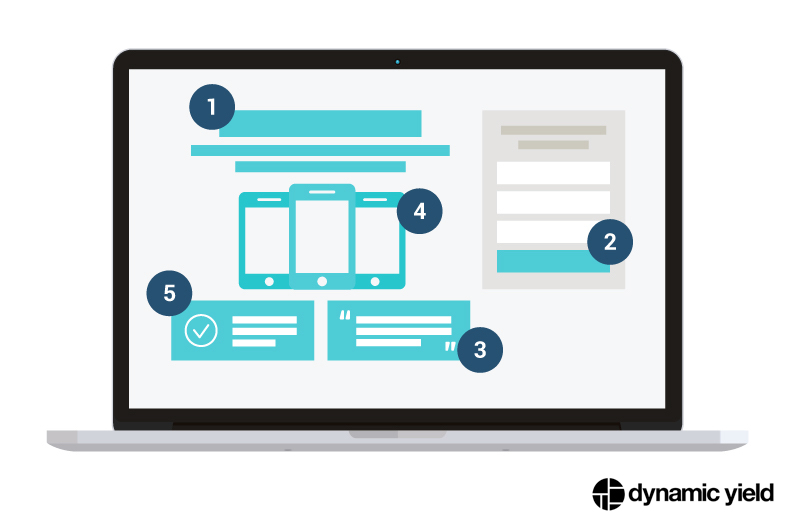
Credit: www.dynamicyield.com
Introduction To Landing Page Optimization
Welcome to the world of landing page optimization. This process involves refining your web pages. The goal? To increase conversions. A well-optimized landing page can turn visitors into customers. Let’s explore why this is important and what goals you should aim for.
Importance Of Optimization
Why should you care about optimizing landing pages? Here are some key reasons:
- Higher Conversion Rates: A well-optimized page leads to more conversions.
- Improved User Experience: Easier navigation keeps users engaged.
- Better SEO: Optimized pages rank higher on search engines.
In short, optimization is essential. It can make or break your marketing efforts.
Goals Of A Landing Page
Understanding the goals of a landing page is crucial. Here are the primary objectives:
- Lead Generation: Collect user information for future marketing.
- Direct Sales: Encourage users to make a purchase.
- Information Sharing: Provide valuable content to build trust.
Each goal requires different strategies. Knowing your goal helps you design better pages. For instance, a lead generation page might use forms. A sales page might highlight product benefits. Information pages might focus on content quality.
To sum up, identifying your goals is the first step. It guides your optimization efforts and helps achieve better results.
Credit: vwo.com
Understanding User Intent
To optimize your landing pages, understanding user intent is crucial. User intent refers to what the user aims to achieve when they visit your landing page. This could include making a purchase, finding information, or signing up for a newsletter. By grasping user intent, you can create a more targeted and effective landing page.
Identifying Target Audience
Begin by identifying your target audience. Understand who your potential users are. This helps in tailoring content and design to meet their needs. Consider the following factors:
- Age
- Gender
- Location
- Interests
- Occupation
Use tools like Google Analytics to gather data about your audience. This will provide insights into their behavior and preferences. Create audience personas to represent different segments of your target audience. This helps in visualizing and addressing their specific needs.
Mapping User Journey
Mapping the user journey involves understanding the steps users take on your landing page. This includes:
- Arrival
- Engagement
- Conversion
Analyze how users interact with your page. Identify common paths and drop-off points. Use heatmaps and user recordings to see where users click and scroll. This helps in pinpointing areas that need improvement.
Create a clear and logical flow on your landing page. Ensure each step leads users closer to conversion. Include clear call-to-actions (CTAs) that guide users through the journey.
By understanding user intent, identifying the target audience, and mapping the user journey, you can optimize your landing pages effectively. This leads to higher engagement and conversion rates.
Design And Layout Best Practices
Optimizing landing pages is essential for increasing conversions. The design and layout play a significant role in ensuring visitors stay and take the desired action. Here are some best practices to keep in mind.
Visual Hierarchy
Visual hierarchy guides the eye to what’s important first. Use larger fonts for headlines. Contrast colors to highlight key elements. Place important information above the fold. Arrange content in a logical order.
- Use bold and large fonts for headings
- Contrast colors for call-to-action buttons
- Keep important information at the top
- Organize content logically
Responsive Design
Responsive design ensures your landing page looks great on all devices. A mobile-friendly site boosts user experience. Test your site on different devices. Use flexible layouts and images.
| Device | Best Practices |
|---|---|
| Mobile | Use large buttons, readable fonts |
| Tablet | Ensure touch-friendly navigation |
| Desktop | Make full use of screen space |
Test on multiple devices. Ensure your layout adjusts automatically. This improves user experience and reduces bounce rates.
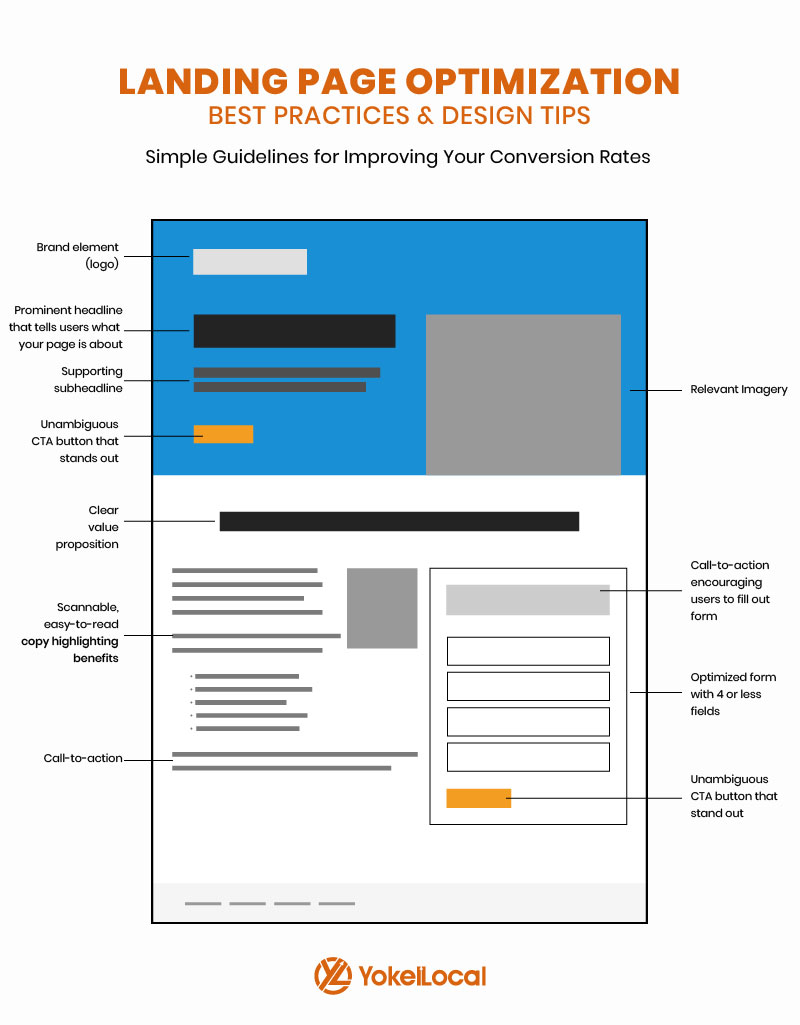
Credit: www.yokellocal.com
Crafting Compelling Headlines
Crafting compelling headlines is crucial for optimizing landing pages. A strong headline grabs attention and encourages visitors to stay. It sets the stage for the rest of the content. To create effective headlines, focus on attention-grabbing techniques, relevance, and clarity. Let’s explore these aspects in detail.
Attention-grabbing Techniques
An attention-grabbing headline catches the eye quickly. Use bold and exciting words. Ask a question or make a bold statement. Here’s a table with some techniques to consider:
| Technique | Example |
|---|---|
| Use Numbers | 10 Tips for Better Sleep |
| Ask a Question | Want to Boost Your Energy? |
| Make a Promise | Get Fitter in 30 Days |
| Create Urgency | Don’t Miss Out on This Offer! |
Use these techniques to ensure your headline stands out. Remember, the headline is the first thing visitors see. Make it count.
Relevance And Clarity
A headline must be relevant and clear. It should match the content of the landing page. If it doesn’t, visitors may leave quickly.
Focus on these points to ensure relevance and clarity:
- Be Specific: Avoid vague headlines. Clearly state what visitors can expect.
- Match Content: Ensure the headline aligns with the page’s main message.
- Keep It Simple: Use easy-to-understand language. Avoid complex words.
- Highlight Benefits: Show the value visitors will get. Make it clear and direct.
A relevant and clear headline builds trust. It helps visitors understand what they will gain. It increases the chances of them staying on the page.
Effective Use Of Call-to-actions
An effective call-to-action (CTA) is crucial for optimizing landing pages. CTAs guide users to take the desired action. They can convert visitors into leads or customers. This section explores the best practices for using CTAs.
Placement And Visibility
The placement of a CTA button is essential. It should be prominent and easy to find. Place it above the fold so visitors see it without scrolling. Consider repeating the CTA throughout the page. This ensures the user always has a clear action to take.
Visibility matters too. Use contrasting colors to make the CTA stand out. The button should be large enough to click easily. Surround it with white space to draw attention.
Action-oriented Language
The language of your CTA should be clear and action-oriented. Use strong verbs to encourage users to act. Examples include “Download Now,” “Sign Up,” or “Get Started.” Avoid vague terms like “Click Here” or “Submit.” These do not convey the benefit of taking action.
Make the benefit clear in the CTA text. For instance, “Get Your Free eBook” is better than “Download.” The user knows what they will receive. Personalize the CTA when possible. “Start My Free Trial” can be more engaging than “Start Free Trial.”
Consider the following table for action-oriented language:
| Weak CTA | Strong CTA |
|---|---|
| Click Here | Download Now |
| Submit | Get Started |
| Learn More | Discover More |
Effective CTAs are clear, visible, and action-oriented. Optimize your landing pages with these tips. They can help increase your conversion rates.
Optimizing Page Load Speed
Fast-loading landing pages are essential for user experience. When a page loads slowly, visitors leave. To enhance performance, focus on optimizing page load speed.
Importance Of Speed
Page load speed is crucial for several reasons:
- User Experience: Faster pages offer a better experience.
- SEO: Search engines rank faster sites higher.
- Conversion Rates: Slow pages can lead to lost sales.
Studies show that a one-second delay in page load time can reduce conversions by 7%. That’s significant for any business.
Tools And Techniques
Several tools and techniques help improve page load speed. Use these to make your site faster:
| Tool | Purpose |
|---|---|
| Google PageSpeed Insights | Analyze and get suggestions to improve speed. |
| GTmetrix | Provides detailed speed reports and recommendations. |
| Pingdom | Monitors site performance and provides insights. |
- Optimize Images: Compress images without losing quality.
- Minify CSS and JavaScript: Remove unnecessary characters.
- Enable Browser Caching: Store parts of your site in the user’s browser.
- Use a Content Delivery Network (CDN): Deliver content faster by using servers closer to the user.
These steps can significantly improve your page load speed. Always test your site after making changes. This ensures everything works correctly.
A/b Testing And Analytics
A/B Testing and Analytics are crucial for optimizing landing pages. They help you understand what works best for your audience. By running experiments and analyzing data, you can make data-driven decisions to improve user experience and conversion rates.
Setting Up Experiments
To set up an A/B test, start by identifying the element you want to test. This could be a headline, call-to-action button, or image. Create two versions of this element: Version A (the control) and Version B (the variant).
- Define your goal. What do you want to improve? Clicks, sign-ups, or sales?
- Choose your testing tool. Popular options include Google Optimize, Optimizely, and VWO.
- Ensure your test runs for an adequate period. This helps gather enough data for reliable results.
Use your chosen tool to split your traffic between the two versions. Make sure you track which version each user sees. This helps in comparing performance later.
Analyzing Results
After running your test, it’s time to analyze the results. Compare the performance of Version A and Version B. Key metrics to look at include:
| Metric | Definition |
|---|---|
| Conversion Rate | Percentage of visitors who completed the desired action. |
| Bounce Rate | Percentage of visitors who leave after viewing one page. |
| Engagement Time | Average time visitors spend on your page. |
Use a statistical significance calculator to determine if the results are meaningful. A common threshold is 95%, meaning there’s a 95% chance the results are not due to random variation.
Identify the winning version and implement it on your landing page. Continue testing other elements to keep improving. A/B testing is an ongoing process.
Enhancing User Experience
Optimizing landing pages is essential for converting visitors into customers. A key aspect is enhancing the user experience. A positive experience encourages users to stay longer and engage more with your content. Let’s explore how to improve user experience by simplifying navigation and reducing friction points.
Simplifying Navigation
Simplifying navigation is crucial for a smooth user experience. Users should find what they need quickly and easily. Consider these tips:
- Use a clean and clear menu structure.
- Limit the number of menu items.
- Ensure your navigation is consistent across all pages.
A clean menu helps users focus on important content. A consistent navigation system reduces confusion and improves overall user satisfaction.
Reducing Friction Points
Friction points are obstacles that hinder user actions. Reducing these points can significantly improve user experience. Here are some strategies:
- Minimize form fields. Only ask for essential information.
- Use auto-fill and auto-correct features to speed up form completion.
- Ensure fast loading times for all pages.
Speed matters. A slow page can frustrate users and lead to higher bounce rates. Streamlined forms can lead to better conversion rates.
Here’s a simple table summarizing these strategies:
| Strategy | Benefit |
|---|---|
| Clean Menu Structure | Easy to navigate |
| Consistent Navigation | Reduces confusion |
| Minimize Form Fields | Quick form completion |
| Fast Loading Times | Improves user satisfaction |
By focusing on simplifying navigation and reducing friction points, you can create a more enjoyable and effective landing page for your users.
Frequently Asked Questions
What Are Landing Page Best Practices?
Use clear headlines, strong CTAs, and high-quality images. Ensure fast load times. Keep the design clean and user-friendly.
How Can I Improve Landing Page Conversions?
A/B test different elements, simplify forms, and use persuasive copy. Optimize for mobile devices. Ensure quick loading.
Why Is Page Load Speed Important?
Fast load speeds reduce bounce rates and improve user experience. They also help with SEO rankings and conversions.
What Makes A Good Landing Page Design?
A good design is clean, visually appealing, and easy to navigate. It should highlight the main message clearly.
Conclusion
Optimizing landing pages boosts user experience and drives conversions. Focus on clear headlines. Use engaging visuals and concise content. Test different elements for better results. Ensure fast loading times. Simplify navigation and remove distractions. Strong call-to-actions guide users effectively. Regularly update content for relevance.
These steps help create effective landing pages. Your efforts will pay off with increased engagement and success.