

A/B testing is a crucial tool in digital marketing. It helps optimize website performance and improve user experience.
Imagine you have two versions of a webpage, and you’re unsure which one works better. This is where A/B testing comes in handy. By comparing different versions, you can see which one performs best. This method helps you make data-driven decisions.
It saves time and resources. Plus, it boosts your conversion rates. Understanding A/B testing can be a game-changer for your business. It provides clear insights into what works and what doesn’t. Ready to dive into the best features of A/B testing? Let’s explore how it can benefit your website and marketing efforts.
Introduction To A/b Testing
A/B testing is a powerful method in the digital marketing toolbox. It helps marketers understand what works best for their audience. By comparing two different versions, you can see which one performs better.
What Is A/b Testing?
A/B testing, also known as split testing, is a method of comparing two versions of a webpage or app. You can show version A to one group and version B to another group. The goal is to find out which version performs better based on specific metrics like clicks or conversions.
For example, you can test two different headlines for a landing page. Half of your visitors see headline A and the other half see headline B. After the test, you can see which headline gets more clicks.
| Version | Visitors | Clicks |
|---|---|---|
| Headline A | 500 | 50 |
| Headline B | 500 | 75 |
In this example, headline B is more effective.
Importance In Digital Marketing
A/B testing plays a crucial role in digital marketing. It helps optimize content and improve user experience. This leads to higher conversion rates.
Here are some key benefits of A/B testing:
- Identifies what resonates with your audience
- Improves website performance
- Increases user engagement
- Reduces bounce rates
- Boosts conversion rates
With these benefits, A/B testing becomes an essential tool for any digital marketer. It provides data-driven insights that help make informed decisions.
Setting Clear Goals
A/B testing is a powerful tool for optimizing your website. The key to success is setting clear goals. Without them, your efforts may go to waste. Let’s dive into the steps to ensure your goals are well-defined.
Defining Objectives
Defining objectives is the first step in setting clear goals. Start by asking yourself what you want to achieve. Do you aim to increase conversions? Or do you want to improve user engagement? Write down your objectives. Make them specific and measurable.
For example, instead of saying “increase sales,” say “increase sales by 10% in the next month.” This way, you know exactly what success looks like.
Measuring Success
Once you have clear objectives, the next step is measuring success. How will you know if your A/B test is working? Choose metrics that align with your objectives.
If your objective is to increase conversions, track the conversion rate. If you want more user engagement, monitor metrics like page views or time spent on site. Use tools like Google Analytics for accurate tracking.
Here’s a simple table to help you understand the process:
| Objective | Metric |
|---|---|
| Increase Sales | Sales Volume |
| Improve User Engagement | Time on Site |
| Boost Conversion Rate | Conversion Rate |
By defining objectives and measuring success, you set a clear path for your A/B testing efforts. This ensures you make informed decisions and achieve meaningful results.
Target Audience Segmentation
Target Audience Segmentation is crucial for effective A/B testing. It helps to understand which groups respond best to different variations. This can lead to more targeted and effective marketing strategies. Below, we explore two key aspects: Identifying Key Segments and Personalized Testing Strategies.
Identifying Key Segments
Identifying Key Segments involves breaking down your audience into smaller groups. These groups can be based on demographics, behavior, or interests.
Demographic Segmentation can include age, gender, income, or location. These factors help to create more relevant content.
Behavioral Segmentation looks at user actions, such as past purchases or browsing history. This can help in predicting future behaviors.
Interest-Based Segmentation focuses on what the audience likes or follows. Knowing their interests can lead to more engaging content.
Here is a simple table to summarize the types of segments:
| Type of Segmentation | Examples |
|---|---|
| Demographic | Age, Gender, Income, Location |
| Behavioral | Past Purchases, Browsing History |
| Interest-Based | Likes, Follows, Hobbies |
Personalized Testing Strategies
Once you have identified key segments, it is important to use Personalized Testing Strategies. This means tailoring your A/B tests to each segment.
Here are some strategies for personalized testing:
- Custom Messaging: Create different messages for each segment. This ensures relevance.
- Unique Offers: Offer discounts or deals that appeal to specific groups. This increases engagement.
- Different Visuals: Use images and videos that resonate with each segment. This enhances user experience.
Personalized testing can lead to higher conversion rates. It makes users feel understood and valued.
In summary, Target Audience Segmentation and Personalized Testing Strategies are essential. They improve the effectiveness of A/B testing. This leads to better marketing results.
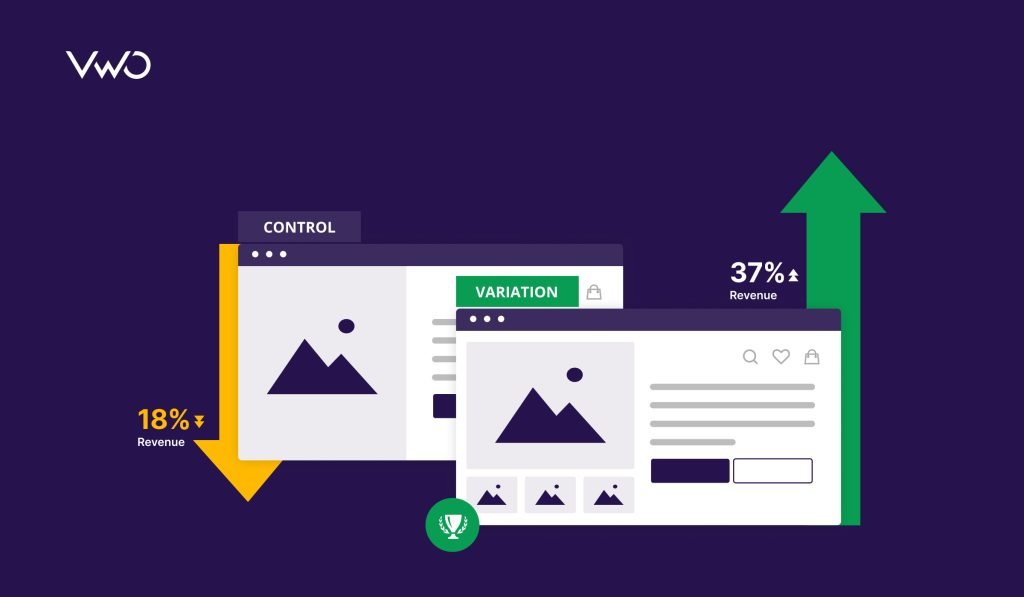
Credit: vwo.com
Test Design And Variations
When conducting A/B testing, test design and variations play a crucial role. Proper planning ensures meaningful results. This section delves into creating hypotheses and developing variants.
Creating Hypotheses
Start with a clear hypothesis. This is a statement predicting the outcome. It should be based on data or insights.
Example:
- If we change the call-to-action button color, then the click rate will increase.
Ensure your hypothesis is specific and measurable. It helps in understanding the impact of changes.
Gather data from:
- Website analytics
- User feedback
- Heatmaps
This data provides a solid foundation for your hypothesis.
Developing Variants
After forming a hypothesis, develop different variants. These are versions of the element you want to test.
Example:
| Variant | Description |
|---|---|
| A | Original call-to-action button (blue) |
| B | New call-to-action button (green) |
Keep variations simple. Too many changes can lead to unclear results.
Use these steps:
- Identify the element to change.
- Create a new version of that element.
- Ensure both versions are live simultaneously.
Use tools like:
- Google Optimize
- Optimizely
- VWO
These tools help in setting up and tracking variants.
By following a structured approach, you can enhance your A/B testing process. This leads to better decision-making and improved results.
Data Collection Methods
A/B testing is a powerful tool for optimizing your website or app. One of the key aspects of A/B testing is effective data collection. This ensures you gather the right information to make informed decisions. Let’s dive into some essential data collection methods.
Selecting Metrics
Choosing the right metrics is crucial for A/B testing. Metrics help you understand the success of your tests. Here are some important metrics to consider:
- Conversion Rate: Measures how many users complete a desired action.
- Bounce Rate: Shows the percentage of users who leave your site quickly.
- Time on Page: Indicates how long users stay on a specific page.
- Click-Through Rate (CTR): Tracks the percentage of users who click on a link.
These metrics provide insights into user behavior and test performance. Select the metrics that align with your goals.
Tracking User Behavior
Understanding how users interact with your site is vital. Tracking user behavior helps you identify patterns and areas for improvement. Here are some methods:
- Heatmaps: Visual representations of where users click, scroll, and hover.
- Session Recordings: Videos of user sessions to see their actions in real-time.
- Event Tracking: Monitors specific actions like button clicks and form submissions.
Use these tools to gain a deeper understanding of user behavior. This data helps you make more informed decisions in your A/B tests.
In summary, selecting the right metrics and tracking user behavior are essential for successful A/B testing. These data collection methods provide valuable insights and guide your optimization efforts.
Analyzing Test Results
Analyzing test results is crucial in A/B testing. It helps you make informed decisions. Understanding the data ensures you choose the best version. Here, we focus on interpreting data and statistical significance.
Interpreting Data
Interpreting data means understanding the numbers behind your test. Look at metrics like conversion rates, bounce rates, and user engagement.
- Conversion rates: The percentage of users who completed the desired action.
- Bounce rates: The percentage of users who leave the site quickly.
- User engagement: How users interact with your site.
Use tables to compare these metrics between version A and version B.
| Metric | Version A | Version B |
|---|---|---|
| Conversion Rate | 5% | 7% |
| Bounce Rate | 60% | 50% |
| User Engagement | Moderate | High |
Statistical Significance
Statistical significance tells you if the test results are reliable. It shows if the differences in your test are not by chance.
- Set a confidence level, usually 95%.
- Use tools to calculate p-values.
- Check if the p-value is less than 0.05.
Results with a p-value under 0.05 are considered significant. This means the changes made likely caused the results.
Understanding statistical significance helps avoid false positives. Make sure your test results are trustworthy before making changes.
Implementing Findings
Implementing findings from A/B testing is crucial. It helps in improving your website’s performance. This section will cover how to apply these insights effectively.
Applying Insights
After A/B testing, you gather important data. This data reveals what works best. To apply these insights:
- Identify the winning variant.
- Understand why it performed better.
- Make the changes permanent on your website.
Consistency is key. Ensure that the whole team is aware of these changes. Use the insights to guide future decisions.
Continuous Optimization
A/B testing is not a one-time task. It is an ongoing process. Continuous optimization involves:
- Regularly testing new ideas.
- Monitoring the performance of changes.
- Adjusting strategies based on new data.
By doing this, you ensure your website stays up-to-date. It also helps in adapting to changing user behaviors.

Credit: www.youtube.com
Tools And Software
Choosing the right tools and software for A/B testing is crucial. These tools help you run tests, analyze data, and make informed decisions. Below are some popular A/B testing tools and their features. Integration with analytics platforms is also essential for deeper insights.
Popular A/b Testing Tools
- Optimizely: Known for its user-friendly interface. Offers robust testing capabilities.
- VWO (Visual Website Optimizer): Great for beginners. Provides heatmaps and visitor recordings.
- Google Optimize: Free tool. Integrates well with Google Analytics.
- AB Tasty: Offers personalization features. Good for e-commerce websites.
Each tool has its strengths. Optimizely is known for its ease of use. VWO offers advanced visual editing. Google Optimize is free and integrates seamlessly with other Google tools. AB Tasty focuses on e-commerce needs.
Integration With Analytics Platforms
Integrating A/B testing tools with analytics platforms is beneficial. It provides more detailed insights into user behavior. Here are some popular integrations:
| A/B Testing Tool | Analytics Platform | Benefits |
|---|---|---|
| Google Optimize | Google Analytics | Seamless integration. Free to use. |
| Optimizely | Adobe Analytics | Advanced reporting. In-depth insights. |
| VWO | Mixpanel | Detailed user behavior analysis. |
| AB Tasty | Segment | Personalized customer experiences. |
With these integrations, you can track user interactions more accurately. This helps in making better decisions based on solid data.
Choosing the right tool and integration can significantly improve your testing process. Consider your needs and objectives before making a choice.
Common Pitfalls
A/B testing is a powerful tool for optimizing marketing strategies. Yet, there are common pitfalls that can impact your results. Understanding these pitfalls helps in making better decisions. This section highlights two key areas: avoiding bias and ensuring accurate results.
Avoiding Bias
Avoiding bias in A/B testing is crucial for valid results. Bias can creep in from various sources.
- Selection Bias: Ensure your test groups are comparable. Randomly assign users to each group.
- Timing Bias: Run your tests over similar time periods. Avoid testing during unusual events.
- Sample Size Bias: Use a large enough sample size. Small samples can lead to misleading results.
Using these strategies helps in mitigating bias. This ensures your A/B testing provides reliable insights.
Ensuring Accurate Results
Accurate results are vital for making informed decisions. Several factors influence the accuracy of your tests.
- Consistent Metrics: Define clear metrics for success. Stick to these metrics throughout the test.
- Controlled Variables: Keep variables consistent across both groups. This includes time of day, user demographics, and device types.
- Statistical Significance: Ensure your results are statistically significant. This adds confidence to your findings.
Following these practices helps in achieving accurate results. This makes your A/B testing more effective.
Case Studies And Success Stories
One of the most powerful aspects of A/B testing is seeing real-world applications. Case studies and success stories illustrate the impact of A/B testing on businesses. They show how data-driven decisions lead to meaningful improvements.
Real-world Examples
Real-world examples provide insights into the actual benefits of A/B testing. Here are some businesses that have used A/B testing successfully:
- Company A: Increased their conversion rate by 30% with a new landing page design.
- Company B: Improved their email open rate by 20% using different subject lines.
- Company C: Boosted their click-through rate by 25% by changing their call-to-action button color.
Lessons Learned
Each case study offers valuable lessons. Here are some key takeaways:
| Lesson | Details |
|---|---|
| Test Small Changes | Small changes can have a big impact on results. |
| Analyze Data | Data analysis helps identify what works best for your audience. |
| Iterate | Continuous testing and improvement lead to sustained growth. |
These lessons highlight the importance of testing and iteration. They show how even minor tweaks can lead to significant improvements.
Future Trends
A/B testing has always been a cornerstone of successful digital marketing strategies. As technology advances, so do the methods and tools available for A/B testing. Let’s explore the future trends that are shaping the landscape of A/B testing.
Ai In A/b Testing
Artificial Intelligence (AI) is playing a crucial role in A/B testing. AI algorithms can analyze vast amounts of data faster than any human. This helps in identifying patterns and predicting outcomes with high accuracy. Here are some of the key features:
- Automated Test Design: AI can design tests based on user behavior data.
- Real-Time Analysis: AI provides instant insights, allowing for quicker decisions.
- Personalization: AI helps in creating personalized experiences for different user segments.
Evolving Best Practices
As A/B testing evolves, so do the best practices associated with it. Staying updated with these practices ensures more accurate and reliable results.
| Practice | Description |
|---|---|
| Data-Driven Decisions | Use data to drive all testing decisions. |
| User-Centric Testing | Focus on user experience and feedback. |
| Continuous Testing | Run tests continuously to adapt to changing trends. |
Implementing these evolving best practices can significantly improve the effectiveness of your A/B testing efforts.
Credit: www.convert.com
Frequently Asked Questions
What Is A/b Testing?
A/B Testing is a method comparing two versions of a webpage. It determines which performs better. It helps in optimizing user experience and conversion rates.
How Does A/b Testing Work?
A/B Testing involves splitting traffic between two versions. The performance of each version is then measured. The better-performing version is chosen.
Why Is A/b Testing Important?
A/B Testing identifies the most effective strategies. It improves user engagement and conversion rates. It provides data-driven insights for decision-making.
What Are Key Features Of A/b Testing Tools?
Key features include traffic segmentation, real-time reporting, and multivariate testing. These tools offer easy integration and detailed analytics.
Conclusion
A/B testing offers valuable insights for improving your website. It helps identify what works best. Simple changes can lead to better user experiences. Measure conversions and engagement effectively. Make data-driven decisions with confidence. Optimize your site based on real user feedback.
Save time and resources by focusing on proven strategies. Enhance customer satisfaction with targeted adjustments. A/B testing is essential for any business aiming to grow. Start testing today and see the benefits.