

Data-driven marketing is transforming how businesses make decisions. It relies on data to guide marketing strategies and actions.
In today’s competitive market, guessing is not an option. Brands need precise, data-backed insights to stay ahead. Data-driven marketing helps marketers understand their audience better. It allows for more personalized and effective campaigns. By analyzing customer data, businesses can predict trends and adjust strategies quickly.
This approach improves customer satisfaction and boosts ROI. With the right tools and techniques, data-driven marketing can be a game-changer for businesses. Read on to learn how data can elevate your marketing efforts and bring tangible results.
Introduction To Data-driven Marketing
Data-driven marketing is the use of data to guide marketing efforts. It involves collecting, analyzing, and applying data to understand customer behavior. This approach helps in making informed decisions. It ensures marketing strategies are effective and targeted. Businesses can improve their marketing campaigns by using data insights.
Importance Of Data
Data is crucial for successful marketing. It provides valuable insights into customer preferences and behavior. Marketers can identify trends and patterns through data analysis. This allows them to tailor their strategies accordingly.
Here are some key benefits of using data in marketing:
- Personalization: Data helps in creating personalized customer experiences.
- Efficiency: It ensures marketing efforts are focused and efficient.
- Measurability: Marketers can measure the effectiveness of their campaigns.
- Customer Insights: It provides deep insights into customer needs and preferences.
Evolution Of Marketing Strategies
Marketing strategies have evolved significantly over the years. Traditional marketing relied on intuition and guesswork. Modern marketing, however, is data-driven and analytical.
Below is a table showing the differences between traditional and modern marketing strategies:
| Traditional Marketing | Modern Marketing |
|---|---|
| Intuition-based | Data-driven |
| Mass marketing | Targeted marketing |
| One-way communication | Two-way communication |
| Limited feedback | Continuous feedback |
Modern strategies involve the use of various data tools and technologies. These include customer relationship management (CRM) systems, analytics platforms, and marketing automation software. Marketers can make more informed decisions by leveraging these tools.
In summary, data-driven marketing is about using data to guide marketing efforts. It enhances personalization, efficiency, and measurability. The evolution of marketing strategies shows a clear shift from intuition-based to data-driven approaches.

Credit: www.linkedin.com
Key Components Of Data-driven Marketing
Data-driven marketing is essential in today’s digital world. It helps businesses make informed decisions. Understanding key components is crucial for success. This section covers the main elements of data-driven marketing.
Data Collection Methods
Data collection is the first step in data-driven marketing. There are several ways to gather data. Here are some common methods:
- Surveys: Collect direct feedback from customers.
- Website Analytics: Track user behavior on your site.
- Social Media Monitoring: Observe interactions on social platforms.
- Transactional Data: Record purchase history and patterns.
- CRM Systems: Use customer relationship management tools.
Effective data collection provides valuable insights. It helps understand customer needs and preferences.
Data Analysis Techniques
Once data is collected, the next step is analysis. This involves extracting useful information. Here are key techniques:
- Descriptive Analysis: Summarize past data to see trends.
- Predictive Analysis: Use historical data to forecast future trends.
- Prescriptive Analysis: Recommend actions based on data insights.
- Segmentation: Group customers based on similar attributes.
- A/B Testing: Compare two versions to see which performs better.
Data analysis helps improve marketing strategies. It leads to better decision-making and targeting.
| Data Analysis Technique | Description |
|---|---|
| Descriptive Analysis | Summarize past data to see trends. |
| Predictive Analysis | Forecast future trends based on historical data. |
| Prescriptive Analysis | Recommend actions based on data insights. |
| Segmentation | Group customers based on similar attributes. |
| A/B Testing | Compare two versions to see which performs better. |
Understanding these components is vital. It helps create effective data-driven marketing strategies.
Benefits Of Data-driven Marketing
Data-driven marketing leverages data to optimize marketing strategies. Businesses can better understand their customers and improve their marketing efforts. Below are some key benefits of data-driven marketing.
Enhanced Customer Insights
Data-driven marketing provides deep insights into customer behavior. Businesses can track and analyze customer interactions. This leads to a better understanding of customer needs and preferences.
With data, companies can segment their audience. They can create targeted marketing campaigns. These campaigns are more likely to resonate with specific customer groups.
- Identify customer trends
- Understand purchasing patterns
- Personalize marketing messages
Improved Roi
Using data, businesses can allocate their marketing budget more effectively. They can identify the most profitable marketing channels. This ensures a higher return on investment (ROI).
Data helps in measuring campaign performance. Businesses can adjust their strategies based on real-time data. This leads to more efficient use of resources and better results.
| Aspect | Benefit |
|---|---|
| Budget Allocation | Optimize spending on effective channels |
| Performance Tracking | Identify successful campaigns |
| Resource Efficiency | Reduce wasteful spending |
Data-driven marketing is essential for modern businesses. It provides valuable insights and improves ROI. Embrace data to enhance your marketing efforts.
Tools And Technologies
Data-driven marketing relies on the right tools and technologies. These tools help businesses gather, analyze, and act on data. With the right tools, marketers can make informed decisions. Below, we explore some essential tools.
Analytics Software
Analytics software is crucial for data-driven marketing. It helps track and measure performance. Tools like Google Analytics and Adobe Analytics provide detailed insights. They show how users interact with your website. This data helps optimize marketing strategies.
Key features of analytics software:
- Track user behavior
- Measure campaign performance
- Identify high-performing content
Here is a comparison of two popular analytics tools:
| Feature | Google Analytics | Adobe Analytics |
|---|---|---|
| Real-time data | Yes | Yes |
| Custom reports | Yes | Yes |
| Predictive analytics | No | Yes |
Crm Systems
Customer Relationship Management (CRM) systems are vital. They help manage customer data. CRM systems like Salesforce and HubSpot provide a comprehensive view of customer interactions. This data helps improve customer relationships.
Key benefits of CRM systems:
- Centralize customer information
- Enhance customer service
- Improve sales forecasting
Let’s look at a brief comparison of two popular CRM tools:
| Feature | Salesforce | HubSpot |
|---|---|---|
| Email integration | Yes | Yes |
| Customizable dashboards | Yes | Yes |
| Marketing automation | Yes | Yes |
Building A Data-driven Team
Creating a data-driven marketing team is crucial for success. This team will use data insights to make better decisions. They will help your business grow and stay competitive. Let’s explore the skills needed and the ideal team structure.
Essential Skills
To build a data-driven team, focus on these key skills:
- Data Analysis: Team members must analyze data effectively. They should find patterns and insights.
- Technical Skills: Proficiency in tools like Google Analytics, SQL, and Excel is essential.
- Communication: Clear communication helps share data insights with the team and stakeholders.
- Problem-Solving: The ability to solve problems using data is critical.
- Marketing Knowledge: Understanding marketing principles helps apply data insights effectively.
Team Structure
A well-structured team ensures all aspects of data-driven marketing are covered. Here is a suggested structure:
| Role | Responsibilities |
|---|---|
| Data Analyst | Analyze data, create reports, and provide insights. |
| Data Scientist | Develop models and algorithms for deeper insights. |
| Marketing Strategist | Use data to shape marketing strategies and campaigns. |
| Content Specialist | Create and optimize content based on data insights. |
| Technical Expert | Manage and maintain data tools and systems. |
Each role plays a vital part in the success of your data-driven marketing team. Their combined efforts will drive better decisions and strategies.
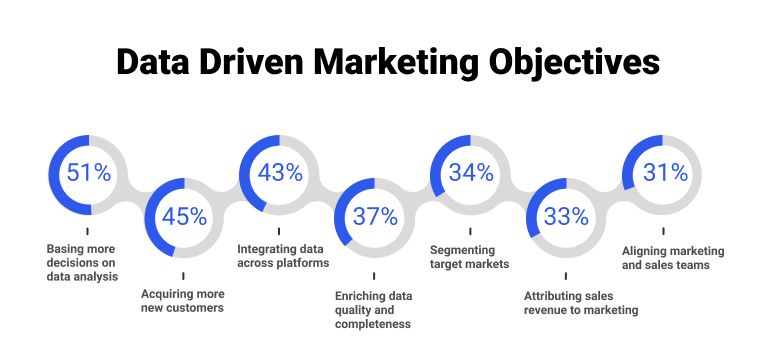
Credit: altcraft.com
Implementing Data-driven Campaigns
Data-driven marketing is essential for modern businesses. Implementing data-driven campaigns can boost your marketing efforts significantly. By leveraging data, you can create more targeted and effective campaigns. This section will guide you through the process, focusing on two critical steps: setting goals and measuring success.
Setting Goals
Clear and measurable goals are vital for any marketing campaign. Start by identifying what you want to achieve. Common goals include:
- Increasing website traffic
- Boosting conversion rates
- Enhancing customer engagement
- Growing email subscription lists
Once you’ve defined your goals, use data to set realistic benchmarks. For example, if you aim to increase website traffic, analyze past data to determine a feasible target. Consider using a SMART framework to ensure your goals are:
| Specific | Measurable | Achievable | Relevant | Time-bound |
|---|---|---|---|---|
| Clearly defined | Quantifiable | Realistic | Aligned with business objectives | Set within a timeframe |
Measuring Success
After setting your goals, the next step is measuring success. Use key performance indicators (KPIs) to track your progress. Some common KPIs include:
- Website traffic
- Click-through rates (CTR)
- Conversion rates
- Customer acquisition cost (CAC)
Collect data from various sources such as Google Analytics, social media insights, and email marketing reports. Regularly review this data to gauge your campaign’s effectiveness. Create a dashboard to visualize your KPIs and track trends over time.
Finally, adjust your campaigns based on the data insights. For instance, if a particular ad is underperforming, tweak its content or targeting. Continuous optimization will help you achieve better results.
Challenges And Solutions
Data-driven marketing offers incredible insights and opportunities. Yet, it also brings significant challenges. Addressing these challenges is key to success. Let’s explore the main hurdles and their solutions.
Data Privacy Concerns
Data privacy is a critical issue. Customers care about how their data is used. Misuse can lead to a loss of trust. Compliance with regulations like GDPR and CCPA is essential.
Here are some solutions to address data privacy concerns:
- Transparency: Clearly explain how you use customer data.
- Consent: Always ask for permission before collecting data.
- Security: Use advanced security measures to protect data.
Following these practices can build trust. It can also ensure compliance with laws.
Overcoming Data Silos
Data silos occur when data is isolated in different systems. This leads to incomplete customer views. It can also hinder marketing efforts.
Consider these solutions to break down data silos:
- Integration: Use tools to integrate various data sources.
- Centralization: Store data in a central repository.
- Collaboration: Encourage teams to share data across departments.
Implementing these solutions can lead to better insights. It can also improve marketing efficiency.
Future Trends In Data-driven Marketing
The future of data-driven marketing is bright and full of potential. With technology evolving rapidly, businesses are now leveraging data like never before. These advancements offer exciting opportunities to enhance marketing strategies and drive better results.
Ai And Machine Learning
Artificial Intelligence (AI) and Machine Learning (ML) are reshaping the marketing landscape. These technologies analyze vast amounts of data quickly. They help marketers understand customer behavior and preferences. AI can predict future trends and automate tasks. This allows for more efficient campaigns. Machine learning algorithms can segment audiences and personalize messages. This leads to higher engagement and conversion rates.
Here are some key benefits of AI and ML in marketing:
- Improved customer insights
- Automated content creation
- Enhanced targeting and segmentation
- Predictive analytics
Personalization At Scale
Personalization is no longer a luxury; it is a necessity. Customers expect personalized experiences across all touchpoints. Data-driven marketing enables businesses to deliver these experiences at scale. By using data, marketers can create tailored content for each customer. This fosters a deeper connection and boosts loyalty.
Here are ways to achieve personalization at scale:
- Use customer data to segment audiences.
- Create personalized email campaigns.
- Implement dynamic website content.
- Leverage personalized product recommendations.
Personalization also impacts customer journey mapping. By understanding individual preferences, marketers can optimize each step of the journey. This ensures a seamless and engaging experience for the customer.
In summary, the future of data-driven marketing is promising. AI and machine learning drive efficiency and insights. Personalization at scale enhances customer experiences. These trends are set to transform marketing strategies in the coming years.
Case Studies
Case studies offer valuable insights into the success of data-driven marketing. They provide real-world examples of how businesses have used data to improve their marketing efforts. This section will explore some notable case studies, highlighting successful campaigns and the lessons learned.
Successful Campaigns
Several companies have achieved remarkable results with data-driven marketing. These success stories demonstrate the power of leveraging data.
| Company | Campaign | Results |
|---|---|---|
| Netflix | Personalized Recommendations | Increased user engagement by 30% |
| Amazon | Targeted Email Campaigns | Boosted sales by 15% |
| Coca-Cola | Custom Content Marketing | Enhanced brand loyalty |
Lessons Learned
Each successful campaign offers valuable lessons. Here are some key takeaways:
- Personalization: Tailoring content to individual preferences increases engagement.
- Targeting: Specific targeting can significantly boost sales.
- Content Quality: High-quality content fosters brand loyalty.
Data-driven marketing requires ongoing analysis and adaptation. By learning from these case studies, businesses can refine their strategies and achieve better results.

Credit: www.swwmarketing.com
Frequently Asked Questions
What Is Data-driven Marketing?
Data-driven marketing uses data to optimize marketing strategies. It helps in making informed decisions. It targets the right audience effectively.
Why Is Data-driven Marketing Important?
Data-driven marketing improves campaign efficiency. It ensures better targeting and personalization. It increases ROI and customer satisfaction.
How Do You Collect Marketing Data?
Marketing data is collected through surveys, web analytics, and social media. Customer feedback and CRM systems are also used.
What Tools Are Used In Data-driven Marketing?
Common tools include Google Analytics, HubSpot, and Salesforce. These tools help in tracking and analyzing data effectively.
Conclusion
Data-driven marketing offers clear benefits for your business. It allows you to understand customer behavior better. You can make informed decisions with accurate data. This approach helps optimize your marketing efforts. It saves time and resources. By focusing on data, you can achieve better results.
Your campaigns will become more effective. Start leveraging data today. It will enhance your marketing strategy. Keep tracking, analyzing, and improving. Your business growth depends on it.